US Treasuries: yields in line with nominal growth
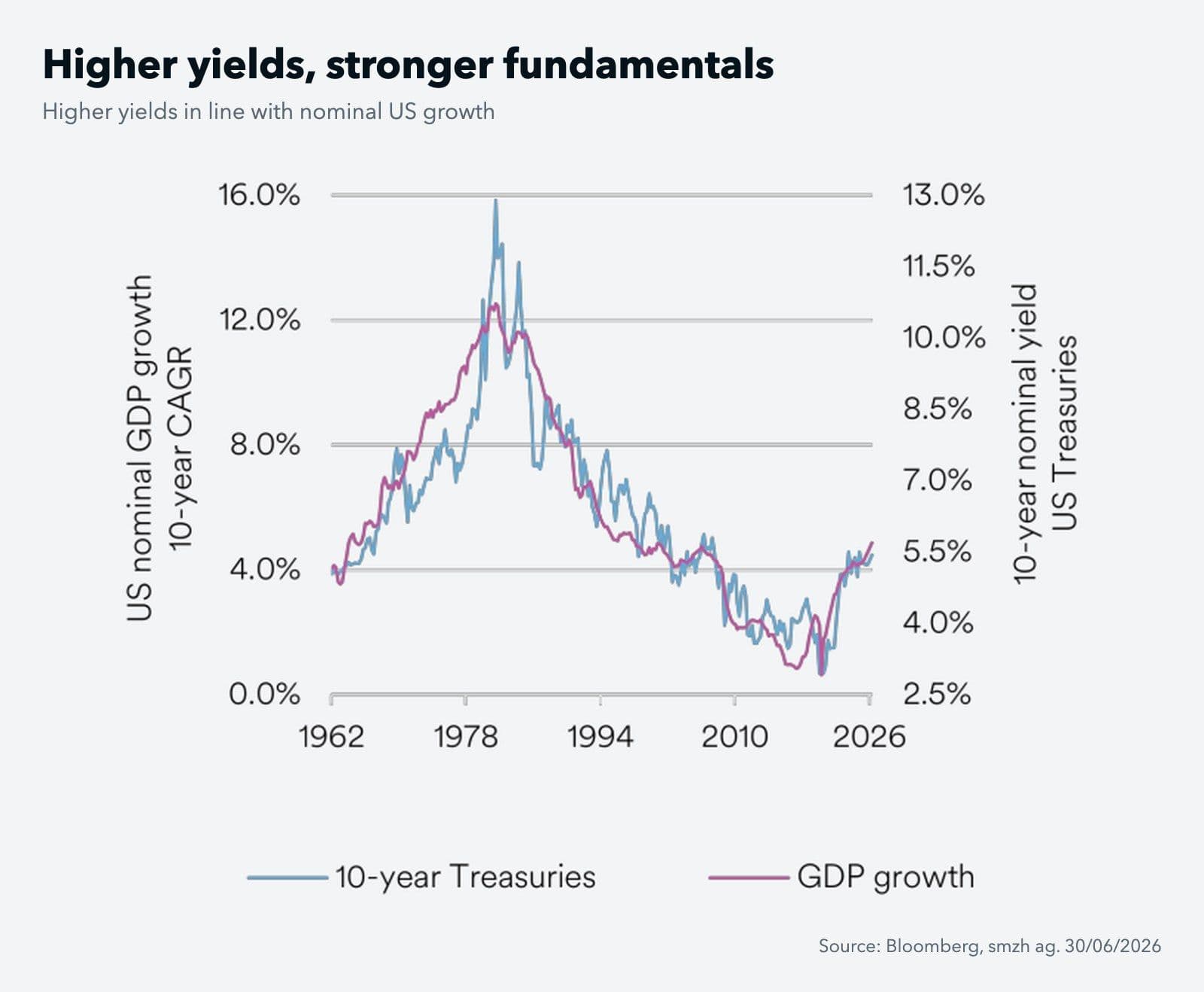
A frequently underestimated factor behind the current level of US yields is the strength of nominal economic growth. Nominal US GDP grew at an annualized 5.8% in the first quarter of 2026 and accelerated to 8.5% in the second quarter. On average, nominal growth thus exceeded 7% in the first half of the year. At a yield of just under 5%, the 10-year US Treasury is therefore not decoupled from fundamentals. Rather, it reflects an economy with robust nominal income growth. Together with higher inflation expectations, rising term premiums and fiscal risks, strong nominal growth argues for keeping the long-term level of yields structurally higher. The relationship between nominal yields and nominal GDP has so far received comparatively little attention in market commentary. In our view, however, it is relevant for assessing whether the current level of yields reflects fundamental stress or a rational repricing.
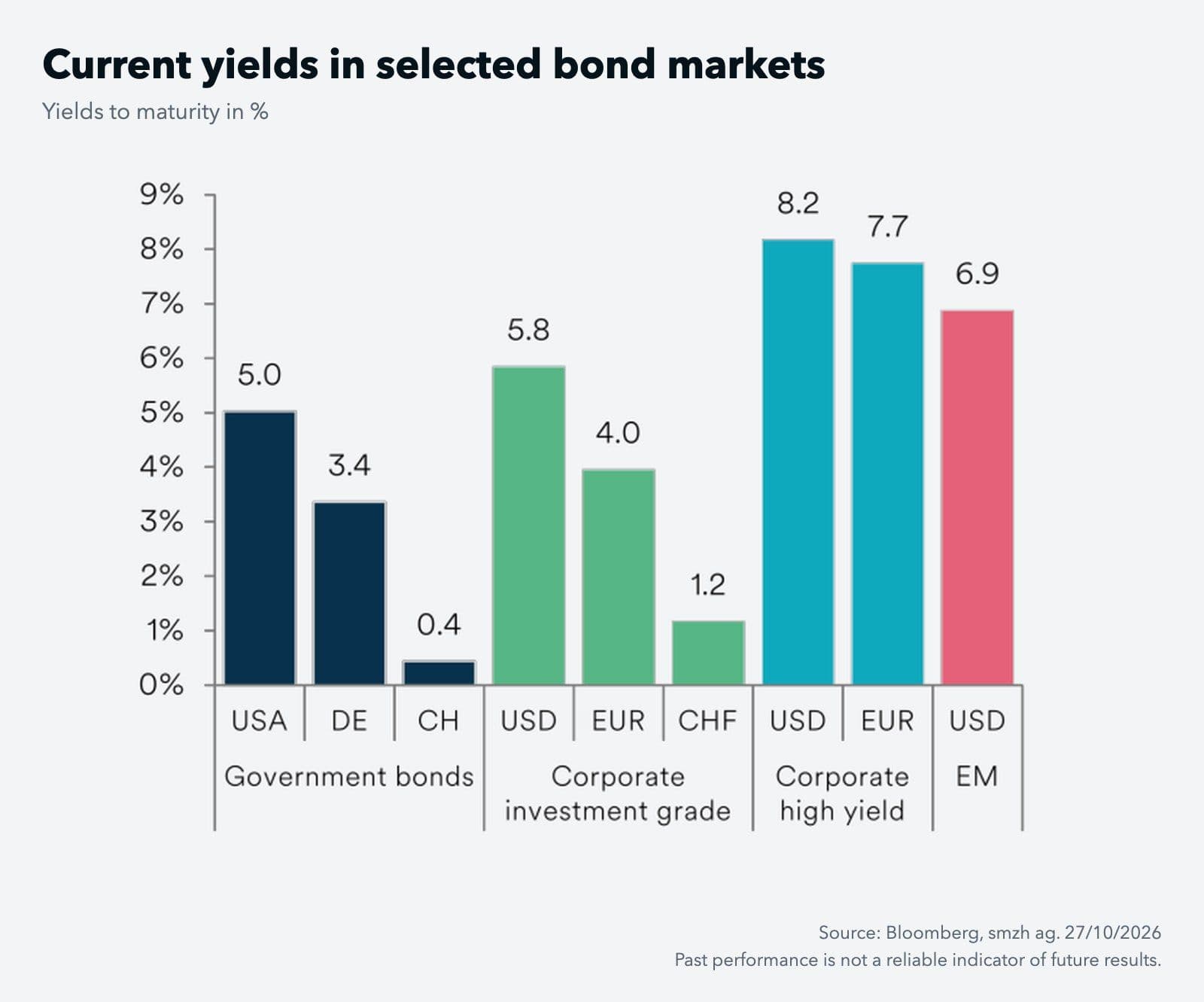
For context: when market yields rise, the prices of bonds already issued fall, because their fixed coupon payments are worth less by comparison. For new investments, however, a higher level of yields means higher current income. The yield to maturity indicates the annual return earned if a bond is bought at today’s price and held until it is redeemed.
Credit spreads remain tight despite widening
Corporate bonds have also come under pressure so far this year. Investment grade and high yield spreads have recently widened slightly but remain low by historical standards. The rise in yields and the associated price losses were driven primarily by higher risk-free rates rather than by a deterioration in corporate credit quality. Corporate fundamentals remain solid overall, although the widening of spreads is noticeable among weaker high yield issuers in particular. Emerging market bonds proved comparatively robust and benefited from continued solid fundamentals. For investors, the focus is therefore on income rather than on the prospect of further capital gains.