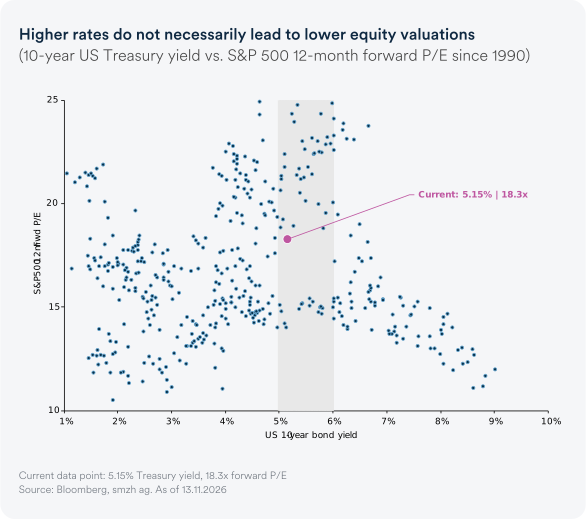
Yields on 10-year US Treasuries have once again climbed above the 5% mark and currently stand at around 5.15%. This extends the ongoing repricing in the US bond market, driven in large part by persistent inflation and the higher rate expectations that come with it. After October US inflation data came in above expectations, financial markets are now firmly pricing in another 25-basis-point Fed rate hike in December. Some market participants even expect a larger 50-basis-point move. At the same time, rising government debt, widening budget deficits, and heavy issuance are pushing long-term bond yields higher.
Once 10-year Treasury yields break above 5%, warnings from market observers and strategists grow louder, and at 5.5% the debate would likely intensify considerably. In our view, however, the absolute level of yields says little on its own. What matters more is the macroeconomic environment in which they arise.
Nominal growth: an underestimated factor
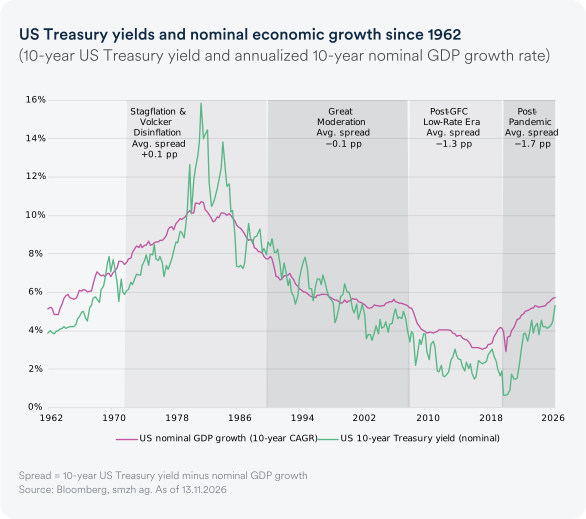
A look at the long-term picture shows that nominal 10-year Treasury yields and nominal GDP growth moved largely in tandem for decades. Only after the global financial crisis did a gap open up. Between 2008 and 2019, bond yields averaged 1.3 percentage points below nominal economic growth. Since 2020, the gap has averaged around 1.7 percentage points.