smzh blue logo
Finance
Investments

Rising Energy Fuel Swiss Inflation

Artikel
3 Nov 2026
smzh-image

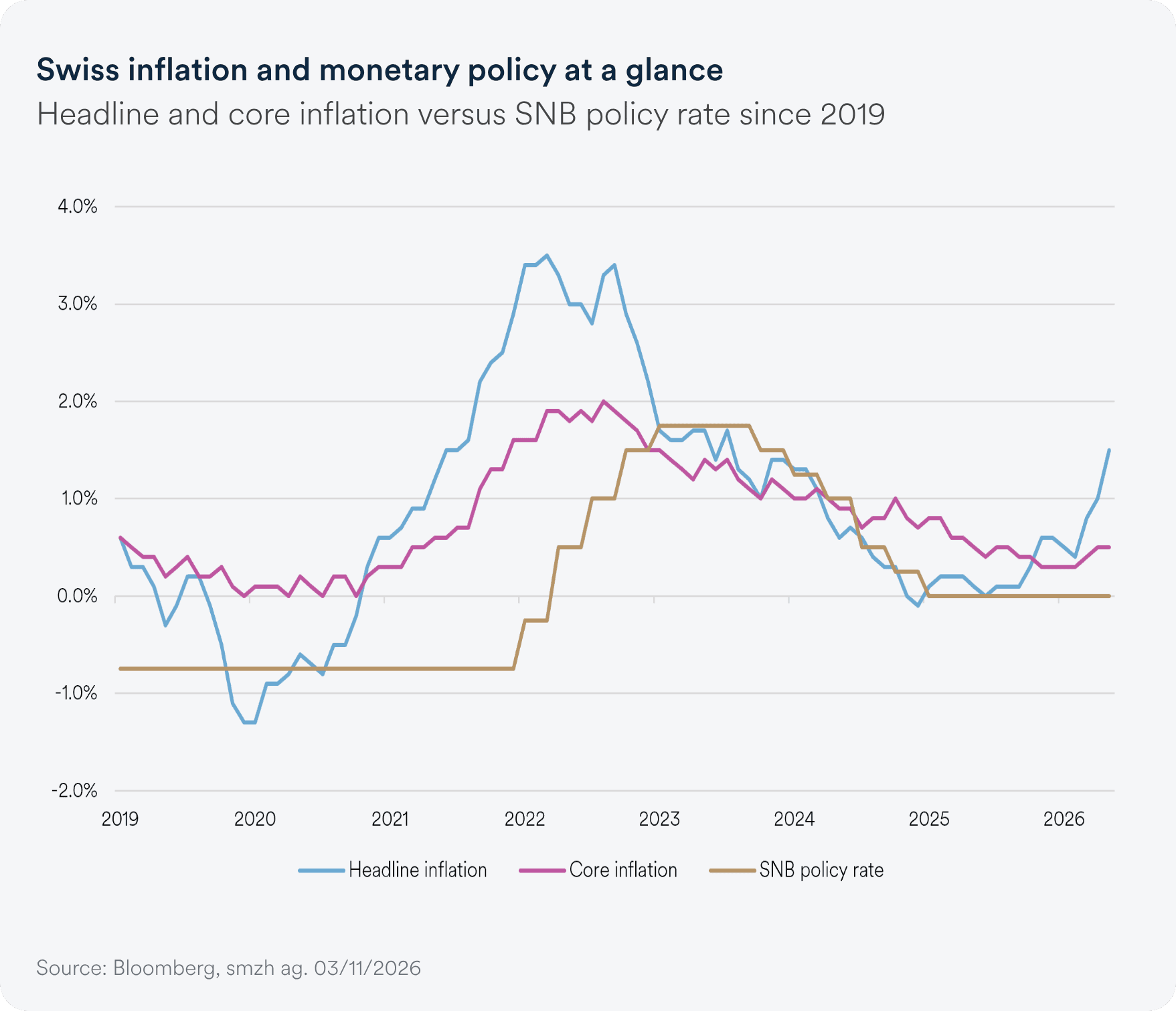
Inflation in Switzerland rose more than expected in October, reaching 1.5%, its highest level since 2023. This represents an increase of 0.5 percentage points from the previous month. The main driver was higher prices for imported energy such as heating oil, gasoline, and diesel. The ongoing conflict in the Middle East and the resulting uncertainty in international energy markets continue to put upward pressure on energy prices.

Core inflation, which excludes volatile components such as energy and fuel, remained unchanged at 0.5%. This suggests that price pressures have so far spread only to a limited extent to other goods and services. The recent rise in inflation should therefore be viewed primarily in the context of higher energy prices and is not yet a clear sign of broad-based inflationary pressure.

Inflation Switzerland

By international standards, inflation in Switzerland remains moderate. In the Eurozone, inflation stood at 3.8% in September. A significant portion of that increase came from the energy component, whose contribution to headline inflation has risen markedly.

SNB has time to wait and see

While higher energy prices are increasingly shaping expectations for monetary policy worldwide, the Swiss National Bank (SNB) is likely to maintain its wait-and-see approach for now. In its September monetary policy assessment, the SNB attributed the rise in inflation largely to higher energy prices and saw only a slight increase in medium-term inflationary pressure. Switzerland's relatively low reliance on fossil fuels for electricity generation also plays a role, with hydropower and nuclear energy providing a stable foundation for the domestic power supply. Nevertheless, Switzerland remains exposed to international price trends through its imports of energy and goods.

We share the view that the current acceleration in inflation does not, on its own, warrant immediate monetary policy action. As long as higher energy prices do not become entrenched across the broader economy through second-round effects, the SNB should have sufficient room to keep its policy rate unchanged for the time being. We therefore expect a first rate hike in the first half of 2027 at the earliest.

Author:
smzh-image

Bekim Laski

Chief Investment Officer und Partner
Share on: