smzh blue logo
Insurance

Premium Reduction 2027: Eligibility, Calculation, and Application

Artikel
29 Jan 2026
smzh-image

Whether you receive a premium reduction is decided by your canton of residence. There is no single income threshold that applies across Switzerland: eligibility, the amount, the procedure and the deadlines are set by the 26 cantons themselves. The federal government sets the framework, prescribes minimum reductions and contributes to the funding.

The key points at a glance

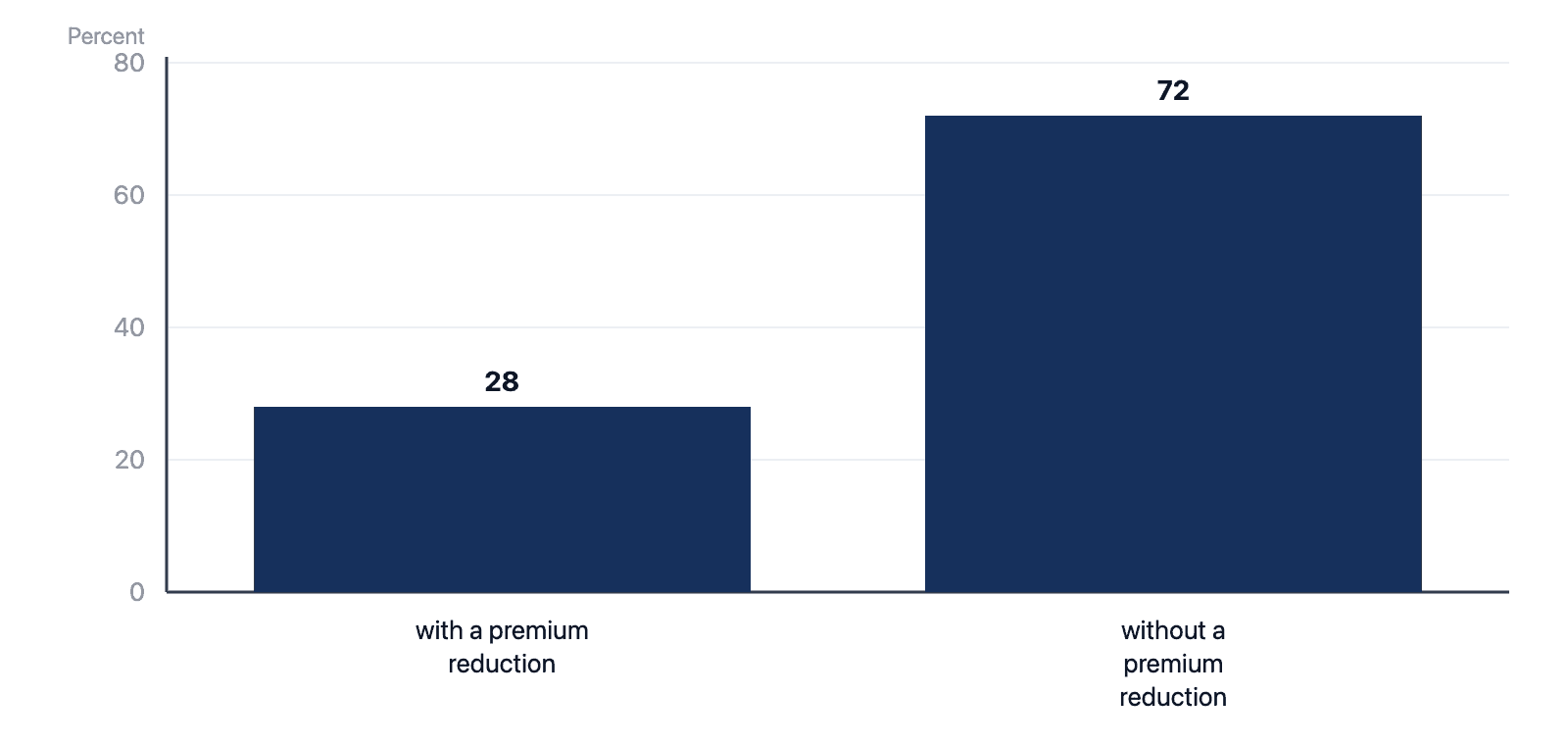
  • In 2023, 2.5 million people received a premium reduction, that is 28 percent of all insured persons.
  • The calculation is not based on your actual premium but on a cantonal reference premium.
  • For lower and middle incomes the federal government prescribes minimum reductions: 80 percent for children, 50 percent for young adults in education.
  • In some cantons eligibility is assessed automatically, in others you have to file an application.

Who is eligible for a premium reduction?

Insured persons in modest economic circumstances. That is how Article 65 of the Federal Health Insurance Act puts it, and the federal government prescribes nothing further in substance. What «modest» means is defined by each canton for itself.

The reason for this arrangement lies in the premium itself. It is not calculated on income but on the expected costs of basic insurance. A family on a low income pays the same amount as one on a high income. The premium reduction is the social balance for that.

Bar chart of the share of insured persons: 28 percent with a premium reduction, 72 percent without
2.5 million people, a financial volume of CHF 5.9 billion. Eligibility, the amount and the procedure are determined by the cantons. There is no Switzerland-wide income threshold.

Source: FSIO, «Prämienverbilligung neu geregelt», Soziale Sicherheit CHSS (2024), 2023 figures.

The figures show that this is not an edge case. In 2023 a good one in four insured persons received a reduction, 2.5 million people in total, and the financial volume came to CHF 5.9 billion. Anyone who assumes eligibility exists only on a very low income underestimates its reach. Families with children and young adults in education in particular fall within it more often than they expect.

How is the reduction calculated?

The reduction is calculated from two figures: a reference premium as the basis, and the relevant income for eligibility. Both are defined at cantonal level.

The reduction is not calculated on the premium you actually pay but on a cantonal reference or benchmark premium. In the Canton of Zurich, for example, that is 70 percent of the regional average premium from 2026. Anyone with an expensive insurer therefore does not automatically receive a higher reduction. Choosing a cheaper insurer remains your own job.

What counts for eligibility is not your taxable income but your relevant income. That is an adjusted figure based on tax data from earlier years. Depending on the canton, deductions are added back in, such as contributions to pillar 3a or buy-ins to a pension fund. So anyone hoping to improve their eligibility through a tax deduction achieves exactly the opposite in many cantons.

The three cantonal systems

The 26 systems can be broadly assigned to three types. All lead to the same result, a contribution towards the premium, but they get there by different routes.

Model typeHow it worksExample cantonsWhat that means for you
Tiered fixed amountsFixed amounts per income bandBernYour contribution jumps at the band boundaries
Percentage or threshold modelThe premium is capped at a share of incomeAargau, ZurichYour contribution changes gradually with your income
Group or barème systemAssignment to eligibility groups by tableGenevaYour contribution depends on the group, not on the exact amount

The differences show up most clearly at the edges. Under the model with tiered fixed amounts, the contribution jumps at every band boundary. One franc more income can cost you a whole band there. Under the percentage or threshold model the contribution changes gradually, so an additional franc of income lowers it only marginally. Under the group system what decides is the assignment to an eligibility group, not the exact amount.

For you that means: whether it is worth influencing your relevant income depends on the type of system in your canton. In a tiered model a small change can achieve a great deal, in a percentage model almost nothing.

Because the systems differ so much, eligibility cannot be compared between cantons. Moving can create eligibility or end it without anything having changed about your income.

What the federal government prescribes

First, the federal government contributes to the funding with 7.5 percent of the gross costs of compulsory basic insurance. Second, for lower and middle incomes it prescribes minimum reductions: children's premiums must be reduced by at least 80 percent, and those of young adults in education by at least 50 percent.

Third, since 1 January 2026 the cantons must contribute a minimum share towards the premium reduction. That share is measured against the gross costs of compulsory basic insurance for the insured persons resident in the canton. In the first two years, 2026 and 2027, the minimum share is 3.5 percent in every canton. After that it depends on the premium burden of the 40 percent of insured persons with the lowest incomes, and reaches 7.5 percent as soon as premiums account for 18.5 percent of income or more. In addition, each canton sets a social target, that is the maximum share of disposable income that premiums may account for. If it fails to do so by 1 January 2030, the Federal Council determines it.

This change is the indirect counterproposal to the Premium Relief Initiative, which was rejected on 9 June 2024. It does not follow from this, however, that eligibility is identical in every canton: the federal government sets a lower limit for how funds are used, not a uniform eligibility rule.

How do you get your premium reduction?

The route to a premium reduction depends on the canton. In some cantons the assessment is automatic: the responsible office evaluates the tax data and pays the reduction directly to your health insurer. In other cantons you have to file an application.

So first check which procedure applies in your canton of residence. You can find the responsible office through the federal premium calculator, which links to the cantonal IPV offices. Have the tax data for the relevant years ready and watch the cantonal deadline. It often falls well before the turn of the year and in several cantons it is a forfeiture deadline.

What you should have ready is manageable: the tax assessment for the relevant years, your current premium invoice and the details of your family situation. If your situation changes during the year, through a birth, a separation or the loss of an income, it is worth notifying the cantonal office regardless of the annual cycle.

The reduction is reassessed every year. An application rejected last year therefore says nothing about the current year if your income or your family situation has changed.

The two routes relate to one another as follows. The premium reduction lowers what you bear without you changing anything about your insurance. Switching insurer lowers the premium itself.

Combine the reduction with a premium comparison

The reduction lowers what you bear, switching insurer lowers the premium itself – you can use both in the same year.

Compare health insurers now

Why the reduction and switching insurer complement each other

Regardless of eligibility, the premium itself remains your lever. Because the reduction is based on the cantonal reference premium and not on your own, switching insurer does not change the contribution: whatever you save on the premium stays entirely with you.

Our analysis of the FOPH 2026 premium dataset shows how much that amounts to. Say you live in the Canton of Zurich, premium region 1, are over 26 and have the family doctor model with a CHF 300 deductible. The median of the 25 insurers analysed charges CHF 564.60 a month, the cheapest CHF 522.80. That is CHF 41.80 a month, or around CHF 502 a year, for benefits that are identical by law and with no effect whatsoever on your premium reduction. smzh's comparison is free and non-binding.

What many people overlook

There are three points to bear in mind on the subject of premium reductions. First, eligibility does not simply continue automatically: in application cantons you have to claim it anew every year. Second, voluntary payments into pillar 3a or buy-ins to a pension fund do not increase eligibility in many cantons, because they are added back into the relevant income. Third, the premium reduction is no substitute for optimisation: it lowers what you bear, but changes nothing about whether your configuration of insurer, deductible and model suits you.

Our assessment: an application never filed can turn out to be an expensive omission. Because some cantons assess eligibility of their own accord and others do not, it is easy to rely on a procedure that does not exist in your own canton at all.

Special cases with the premium reduction

Moving to another canton. Because each canton runs its own system, moving can create eligibility or end it without anything having changed about your income. Check the rules of the new canton independently of those of the old one.

The deadline as a forfeiture deadline. In several cantons the application deadline is a forfeiture deadline. Anyone who misses it loses eligibility for the year in question.

The annual reassessment. Eligibility is reassessed every year. An application rejected last year says nothing about the current year if your income or family situation has changed.

Children and young adults in education. For lower and middle incomes the federal government prescribes minimum reductions: 80 percent for children, 50 percent for young adults in education. That requirement applies regardless of how the canton builds its system.

What is often confused about the premium reduction

Taxable income is not relevant income. What counts for eligibility is an adjusted figure based on tax data from earlier years. Depending on the canton, deductions such as pillar 3a or buy-ins to a pension fund are added back in.

The reference premium is not your premium. The calculation is based on a cantonal reference or benchmark premium. A more expensive insurer therefore brings no higher reduction, and a cheaper one costs you none.

Automatic is not automatic everywhere. In some cantons the responsible office assesses eligibility of its own accord, in others it does not. It pays to find out.

A federal requirement is not cantonal eligibility. The federal government sets minimum reductions and, since 2026, a minimum share for the cantons. Who is eligible, and for how much, is still determined by the canton.

FAQ on the premium reduction

Is there a Switzerland-wide income threshold?

No. Eligibility, the amount, the procedure and the deadlines are determined by the cantons. The federal government only sets the framework and prescribes minimum reductions for children and young adults in education. Eligibility in one canton therefore says nothing about eligibility in the neighbouring canton, even on an identical income.

Do I have to file an application?

Whether you have to file an application depends on your canton of residence. In some cantons the responsible office assesses eligibility automatically on the basis of the tax data and pays directly to the health insurer. In others nothing happens without an application. Clarify early whether an application is needed in your canton, before the deadline for it expires.

Is the reduction calculated on my actual premium?

No. The basis is a cantonal reference or benchmark premium, not the premium you actually pay. In the Canton of Zurich, for example, that is 70 percent of the regional average premium from 2026. A more expensive insurer therefore brings you no higher reduction, and a cheaper one costs you none. Whatever you save by switching insurer stays entirely with you.

Do children always receive a reduction?

Not always, but for lower and middle incomes the federal government prescribes a minimum rate: children's premiums must be reduced by at least 80 percent, and those of young adults in education by at least 50 percent. Whether your income falls within that is determined by the canton.

What changed in 2026?

Since 1 January 2026 the cantons have had to contribute a minimum share towards the premium reduction. In 2026 and 2027 that minimum share is 3.5 percent of the gross costs of compulsory basic insurance in every canton, and thereafter it rises with the premium burden to as much as 7.5 percent. The change is the indirect counterproposal to the Premium Relief Initiative, which was rejected on 9 June 2024. Uniform eligibility across all cantons does not follow from it, because the eligibility rules remain cantonal.

Does a payment into pillar 3a affect eligibility?

In many cantons yes, but not in the way you would expect. What counts for eligibility is the relevant income, an adjusted figure in which deductions such as pillar 3a or buy-ins to a pension fund are added back. The tax deduction lowers your tax bill but does not improve your IPV eligibility. So check the rules of your canton before justifying a payment by reference to eligibility.


Sources

Federal Health Insurance Act (KVG), SR 832.10, Articles 65 and 66: fedlex.admin.ch

Ordinance on Health Insurance (KVV), SR 832.102, Articles 106 et seq.

Federal Office of Public Health, premium calculator and directory of the cantonal IPV offices: priminfo.admin.ch

Federal Social Insurance Office, «Prämienverbilligung neu geregelt», Soziale Sicherheit CHSS (2024), 2023 figures: bsv.admin.ch

Author:
smzh-image

Burak Er

Head Research & Advisory Solutions
Share on: