smzh blue logo
Real Estate

Zurich Housing Initiatives of June 14, 2026: What Real Estate Investors Should Know

Artikel
3 Jun 2026
smzh-image

On June 14, 2026, the voters of Zurich will decide on three cantonal housing policy proposals: the Homeownership Initiative, the Housing Initiative, and the Housing Protection Initiative. Although these proposals differ in terms of objectives and mechanisms, they all point in the same direction: greater political regulation of the housing market. The scope ranges from a new allocation logic for non-profit housing construction, to the creation of an active cantonal housing development entity, to direct interventions in renovations, replacement buildings, and re-purposing. These initiatives are therefore of particular relevance for real estate investors. Depending on the outcome of the vote, the regulatory framework for the Zurich residential real estate market could change significantly.

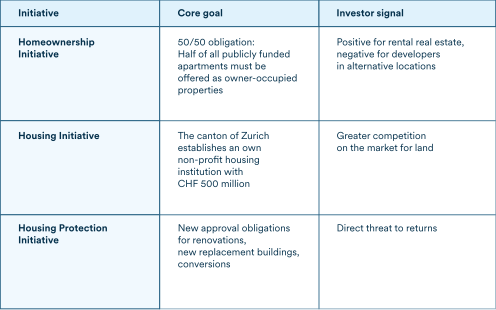
At a glance:

Abb. 1
Core mechanism of the initiative

Homeownership Initiative: More Homeownership at the Expense of Non-Profit Housing

The Homeownership Initiative seeks to extend the existing subsidy model of the Canton of Zurich for non-profit housing to owner-occupied housing. Currently, cantonal and municipal housing promotion is almost exclusively focused on non-profit rental apartments. In the future, state-supported housing projects would be required to follow a binding 50/50 principle: half of the newly constructed units would have to be made available as owner-occupied properties.

Official educational video of the Canton of Zurich (in German)

Impact on state-supported housing projects

The 50/50 mechanism would apply wherever public entities create or acquire housing with government support. This includes not only direct subsidies, but also loans, mortgages, equity contributions, or the provision of land through building rights. In all these cases, half of the units would need to be made available as owner-occupied properties. As a result, the share of rental apartments created via public funding channels would immediately decline.

The initiative is not limited to newly constructed housing but also includes acquisitions and projects supported by loans, mortgages, land, building rights, or equity from the canton or municipalities. It remains open to what extent these provisions would apply to existing properties, such as in cases of refinancing or extensions of existing building rights contracts. Depending on the legal interpretation and implementation, this could lead to additional rental apartments having to be converted into owner-occupied properties.

Market impact: Redistribution rather than expansion

The initiative would not significantly increase the overall housing supply. Instead of creating additional units, part of the publicly funded housing pipeline would be shifted from non-profit rental apartments to subsidized owner-occupied properties. In an already tight rental housing market, this would likely reduce the supply of affordable rental apartments and further increase the importance of the private rental market.

This effect would be particularly relevant for households currently benefiting from very low non-profit rents. Those who live in a non-profit apartment in Zurich far below market rates are unlikely to find similar offers on the private rental market. Consequently, many households may be forced to move to more affordable areas outside the city, shifting demand pressure from the city to the surrounding agglomerations and, in some cases, to more peripheral regions.

Abb. 2

Implications for real estate investors

For investors in income-generating residential properties, a “yes” vote for this initiative could be broadly positive. If fewer affordable rental apartments are created through state-supported projects in the future, this segment of demand will shift to the private rental market. This effect would be especially noticeable in the Zurich agglomeration communities, where households with limited budgets already have only a few alternatives. The likely consequences would be increased demand pressure, lower vacancy risks, and a stronger market position for existing rental stock.

For residential property developers, however, a “yes” vote would likely have a negative impact. The homeownership initiative targets households with middle incomes and wealth, appealing precisely to those buyers who wish to live near city centers but can hardly afford privately financed property in Zurich. Without subsidized options, this group often seeks more affordable alternatives in outlying municipalities or suburban areas. If subsidized ownership opportunities were to become available in central locations, private projects in these alternative markets could lose part of their potential buyer base.

Homeownership Initiative: conclusion for investors

A “yes” vote would benefit rental housing investors but would be negative for developers of owner-occupied properties in more affordable alternative locations.

Die Initiative in Kürze

Housing Initiative: The Canton as a New Actor With Starting Capital of CHF 500 million

The Housing Initiative calls for the Canton of Zurich to establish a public-law housing institution dedicated to providing affordable and non-profit housing. This institution would be equipped with at least CHF 500 million in capital and would be responsible for mobilizing and acquiring suitable land to enable the construction of more non-profit apartments. While the canton already indirectly supports non-profit housing – for example, through building rights or co-financing – with this initiative, it would become an active market participant itself.

Official educational video of the canton (in German)

More competition for land and suitable objects

A new public player in a market already characterized by limited supply would further intensify competition for land. On the one hand, the canton would directly compete with existing non-profit housing providers. On the other, yield-oriented investors could be crowded out in certain bidding processes, particularly at locations suitable for affordable housing.

Counterproposal: More efficient framework conditions

Contrary to the initiative, the counterproposal does not focus on demand for land but instead addresses the framework conditions for housing production. Rather than creating a new public player with significant financial resources, the canton would improve planning, rezoning, and approval processes, thereby facilitating housing development.

From an investor’s perspective, this is fundamentally a more market-oriented approach. While the initiative would increase competition for scarce land, the counterproposal aims to reduce existing barriers on the supply side. However, whether this will actually lead to more housing depends on the concrete implementation of the proposed measures.

Voters have the option to approve both the initiative and the counterproposal. If both measures receive a majority, a deciding question determines which option will be implemented.

Housing Initiative: conclusion for investors

The initiative increases competitive pressure in the land market. The counterproposal, however, would be neutral to positive, as it focuses on improving the framework conditions rather than increasing demand for land.

The initiative in brief

Housing Protection Initiative: Direct Market Intervention With Negative Consequences for Real Estate Portfolios

The Housing Protection Initiative aims to protect existing tenants from displacement as a result of demolitions, comprehensive renovations, conversions, and replacement buildings. If approved, municipalities experiencing housing shortages – defined as a vacancy rate below 1.5 percent – could introduce additional protective measures. These include extra permit requirements for demolitions, renovations, and changes in property use; restrictions on the conversion of rental apartments into condominiums; and regulations on rent developments following renovations. Non-profit apartments would generally be exempt.

Official educational video of the canton (in German)

Direct property risk for residential real estate investors

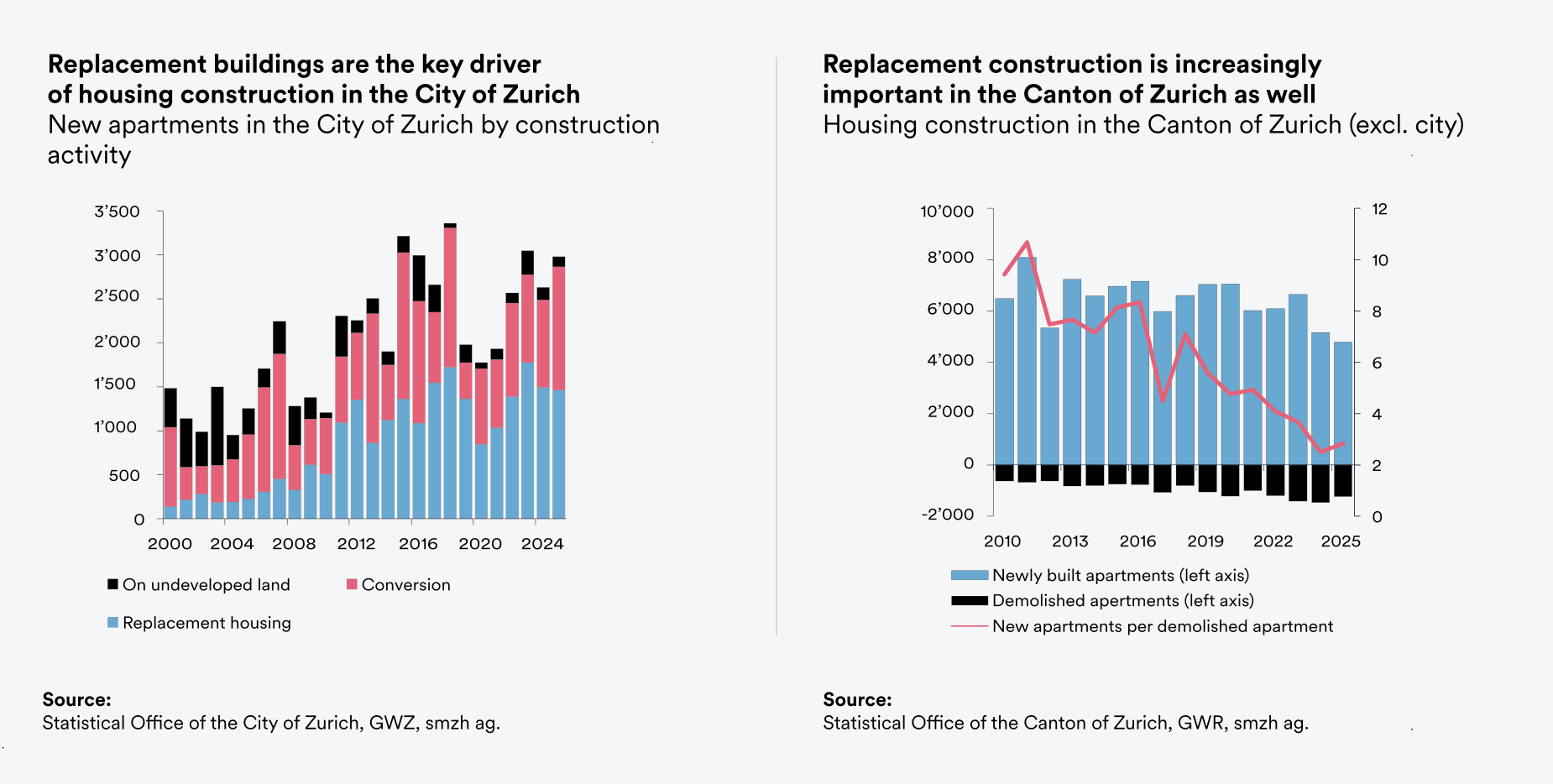
Of the three Zurich housing initiatives, the Housing Protection Initiative would have the most significant impact on real estate investors. In the City of Zurich, the creation of additional apartments increasingly relies on densification, replacement buildings, and rooftop additions. These forms of densification are also gaining importance at the cantonal level. The initiative would directly affect these processes.

This is especially relevant given the strong increase in market rents. In many municipalities, the gap between asking rents and existing rents now exceeds 20 percent. If rent adjustments after renovations are restricted, many renewal and densification projects would lose a key portion of their profitability.

There would also be additional approval procedures, longer planning processes, and greater regulatory uncertainty. Investors wishing to convert existing properties into condominiums would also be affected. Overall, the initiative is likely to reduce investment appetite and increase risk premiums. In an extreme scenario, some investors could reallocate capital to markets with more stable regulatory conditions.

Abb. 3

Implementation lies with the municipalities

The Housing Protection Initiative is designed as an enabling provision, leaving it up to the municipalities whether and how they wish to implement the new instruments. For investors, this creates additional uncertainty, as the regulatory framework could vary from one municipality to another.

At the same time, municipalities gain new political leverage over property owners and investors. Even the possibility of additional requirements or approval procedures could influence negotiations for renovations, replacement buildings, or densification projects and reduce planning certainty.

In addition, there is the factor of timing. Even if the measure is approved, the housing protection provisions would not take effect immediately. The canton would first establish the legal framework, and the affected municipalities would then need to implement the new instruments through their own regulations. Depending on the municipality, this process could involve significant delays, although the City of Zurich would likely move forward more quickly from a political standpoint.

Parallels to Basel: Less far-reaching, but conceptually similar

The Zurich Housing Protection Initiative does not go as far as the Basel model. It avoids fixed rent controls and largely leaves the specifics to the municipalities. However, the underlying logic is the same: renovations, replacement buildings, and conversions should be more tightly regulated to prevent the displacement of existing tenants.

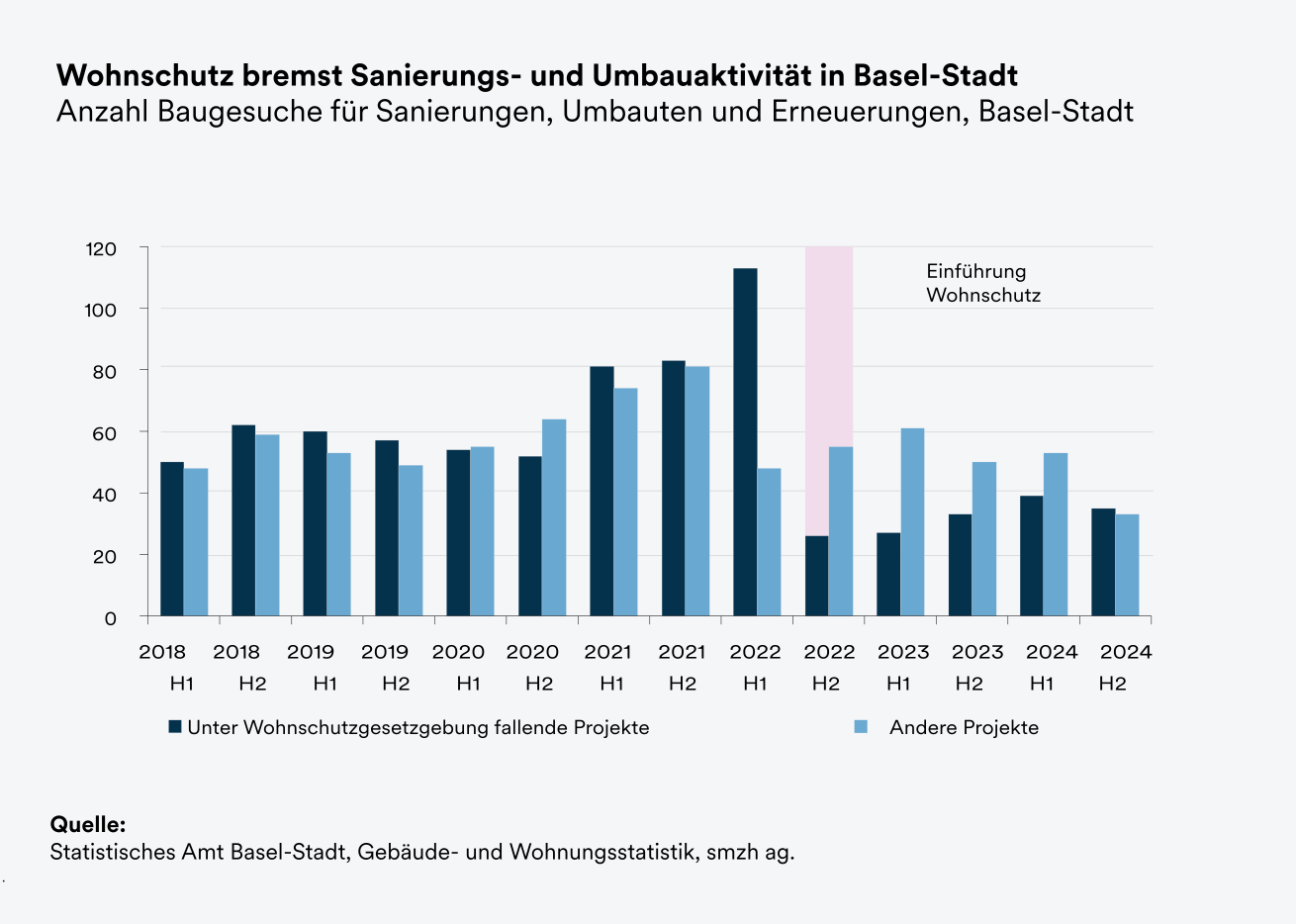
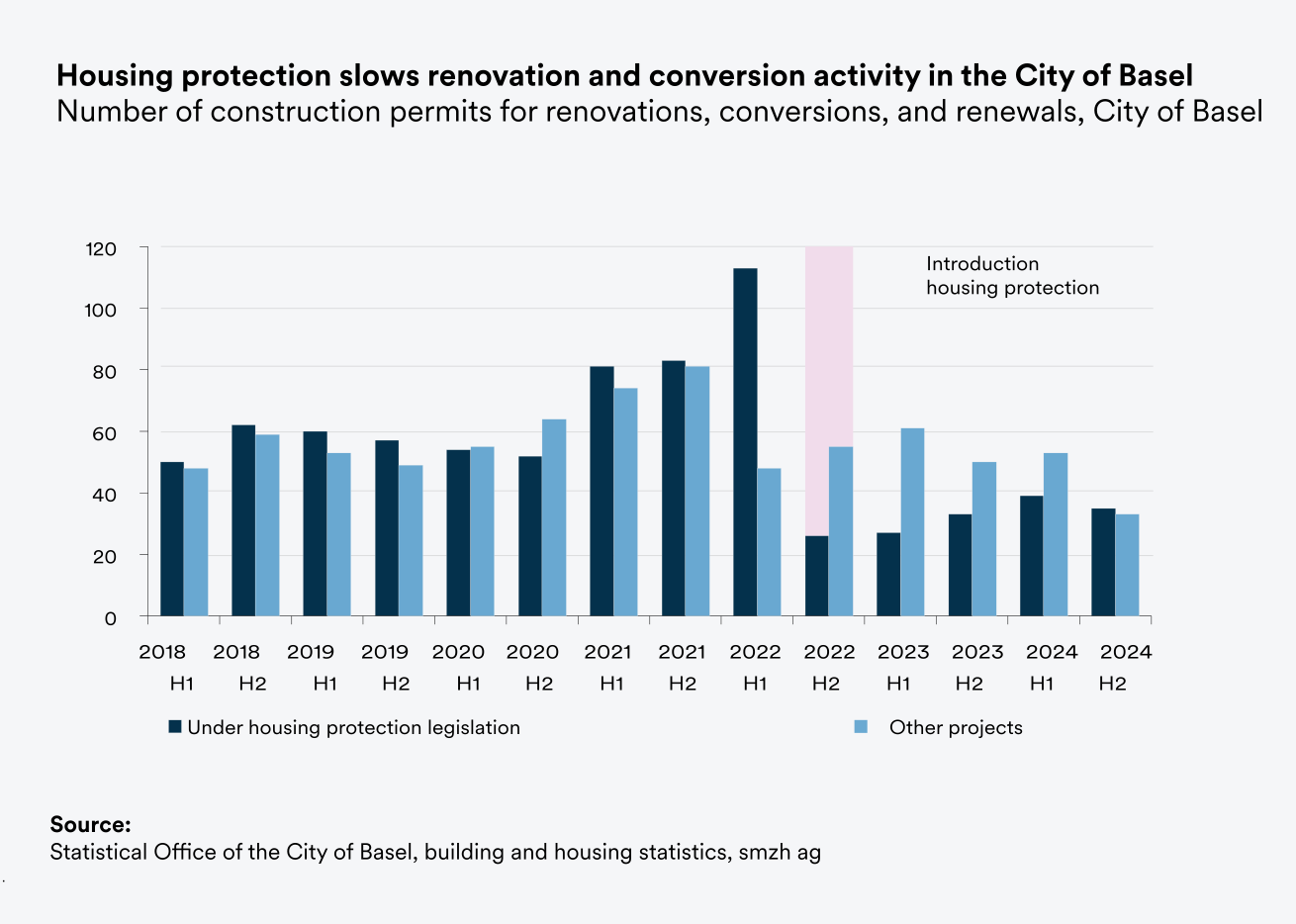
Experience in Basel shows that such interventions are not without side effects. Since the introduction of tenant protection measures, the number of building applications has declined noticeably. At the same time, market participants report growing reluctance from institutional investors, with some reducing their commitments or exiting the market entirely.

The economic impact has become a subject of political discussion. Basel is already adopting changes to the existing housing protection regime to limit the negative consequences on construction activity and investments. Even if the Zurich initiative is not as far-reaching, the example of Basel does show that regulatory interventions can also have undesired side effects.


Abb. 4

Counterproposal: make existing practices legally binding

The counterproposal applies to large-scale renovation, conversion, and replacement construction projects involving at least 20 affected rental units. Property owners would be required to inform tenants at an early stage, designate contact persons, and, if necessary, provide assistance in finding replacement apartments. Failure to meet these requirements could result in the denial of planning permission. This would mainly affect larger residential portfolios and institutional investors.

For many professional investors, however, these requirements do not represent a fundamentally new obligation. Even today, tenants are often informed and supported early in major projects. The reason is practical: objections, political conflicts, reputational damage, and project delays can generate significant costs. Transparent communication and support for affected tenants increase project acceptance and improve planning security.

Therefore, rather than creating entirely new duties, the counterproposal would formalize existing practices that are already common in many cases. As a result, the need for adjustments should be relatively limited for professional investors.

As with the housing initiative, voters may approve both the housing protection initiative and the counterproposal. If both proposals receive a majority, a deciding question will determine which option is implemented.

Housing Protection Initiative: conclusion for investors

The initiative heightens regulatory risks for housing real estate investors and could tangibly deteriorate the economic viability of many renovation and development projects. This would likely diminish the willingness to invest and, in extreme cases, prompt investors to pull capital out oft he Zurich housing market. The counterproposal, however, would primarily anchor existing industry standards in legal form.

Recommendations for investors

If the Housing Protection Initiative is approved, investors with concrete plans for renovation, replacement construction, vertical expansion, or conversion projects would face the most immediate need for action. Even though the housing protection measures would not take effect right away – and affected municipalities would first need to implement the new instruments through their own legislation – such projects should be identified, prioritized, and, where appropriate, accelerated at an early stage.

In addition, political risk remains a real factor in Zurich’s residential property market. As long as housing shortages continue to intensify and supply lags behind demand, pressure for additional regulation is likely to increase. Central locations and nearby municipalities, which have long been considered particularly stable residential property markets, could increasingly become the focus of political intervention. Investors who do not consider potential politically motivated market interventions in their location and property assessments are underestimating a significant risk.

smzh Portfolio Check-up

A portfolio check-up helps identify affected properties, assess regulatory scenarios, and prepare targeted measures for renovation, development, hold period, or exit strategy. In addition, an exclusive deal flow outside the traditional central areas can open up new opportunities: in locations that are less politically exposed but offer an attractive risk-return profile due to solid demand, lower entry prices, and development potential.

smzh supports clients in systematically assessing risks, analyzing portfolio exposure, and identifying potential at an early stage.

Author:
smzh-image

Burak Er

Head Research & Advisory Solutions
Share on: