
smzh blue logo
Finance
Investments

Sell in May and Go Away: Myth or Profitable Strategy?

Artikel
5 Mai 2026
Adobe_Stock_Sell_in_May_fad307e421.jpeg

“Sell in May and go away” is one of the best-known stock market adages. Historical data confirms a statistically weaker pattern during the summer months. Nevertheless, this does not provide a sound basis for an investment strategy. This article explains why that is the case and what the data actually shows.

Seasonality in financial markets

Seasonality refers to recurring patterns that can be observed during certain periods of the calendar year. These patterns have been studied for decades, both in academic research and in market observation.

Among the most famous is the so-called “Santa Claus rally” at year-end – a typically strong market phase around the turn of the year, often attributed to thinner trading volumes, year-end sentiment, and repositioning by institutional investors.

However, the better-known seasonal anomaly is the “Sell in May and go away” pattern. This strategy is defined by an investor exiting the equity markets at the end of April and reinvesting at the end of October. The aim is to avoid the typically weaker performance in the summer months, especially in August and September. Historical data from many equity markets shows that average returns in these months are often below the annual average. Explanations include lower liquidity during the holiday period, profit-taking after the earnings season, and tactical reallocations by institutional investors.

However, it is important to note that a negative average does not necessarily mean that August and September are weak or negative every single year. Median data highlight this, showing that positive phases in summer occur more frequently than the average suggests. There are numerous exception years, which can be crucial for long-term performance.

The decisive question

Are such patterns enough to derive a sound investment strategy? This question is particularly relevant in the current market environment, as despite ongoing geopolitical tensions surrounding the Iran conflict, equity markets reached new highs in April. In such an environment, where fundamental developments are driving prices, it becomes especially clear whether a calendar-based trading strategy offers any independent added value or whether a long-term market participation approach remains superior.

Assessment of historical data

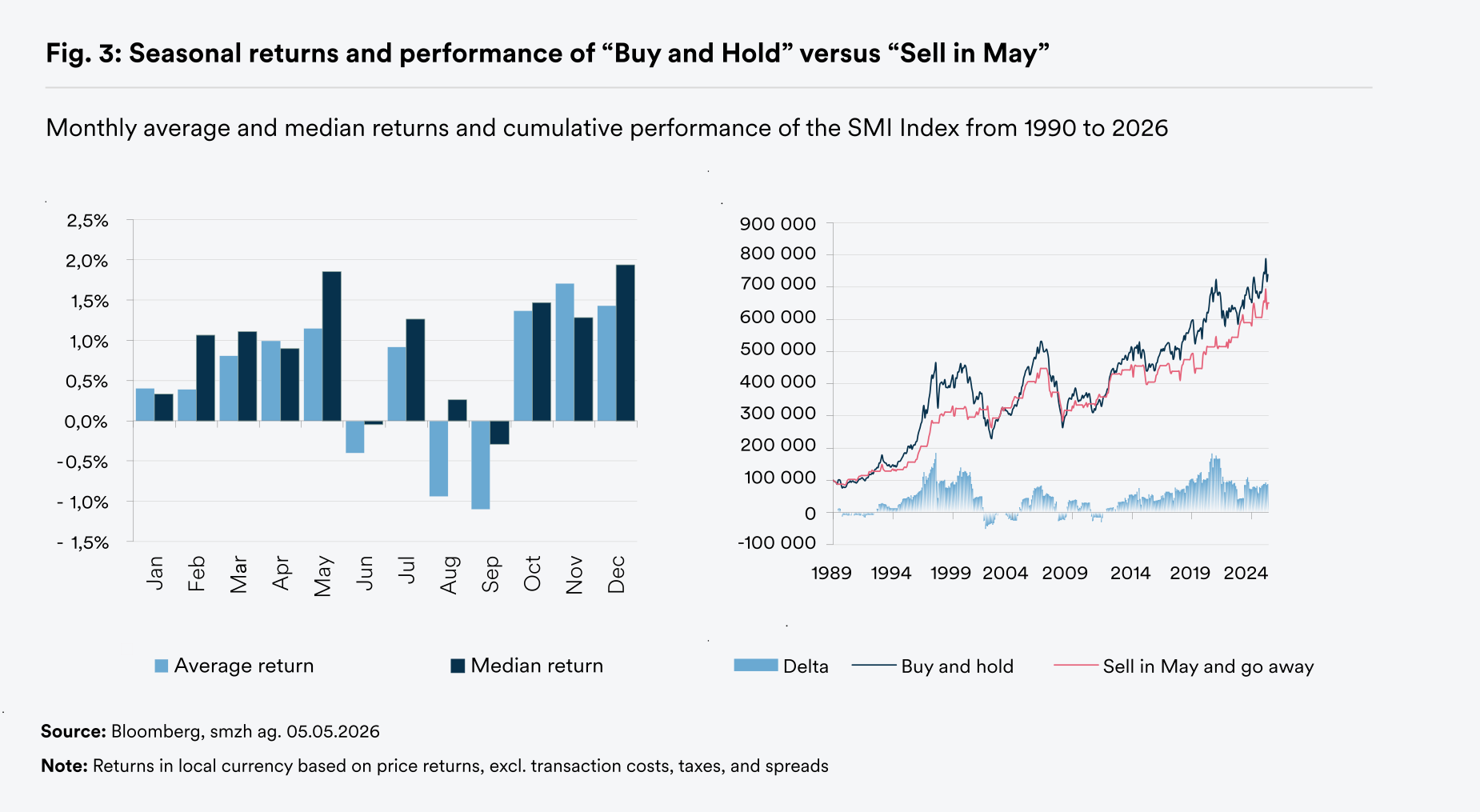
To answer this question, we analyzed the monthly returns of three key equity markets: MSCI World, S&P 500, and SMI. The observation period spans the years 1990 to 2026, calculated on the basis of price returns in local currency. Transaction costs, taxes, and spreads were not considered.

The “Sell in May and go away” strategy is defined as above: exit at the end of April, re-enter at the end of October. The buy-and-hold strategy remains invested at all times. The focus is on whether the seasonal strategy shows a consistent added value over the entire period and how this effect has evolved over time. The graphs demonstrate how an investment of CHF or USD 100,000 in these indices would have performed. The difference (delta) shows the appreciation or depreciation of a "Buy-and-hold" strategy versus a "Sell in May and go away" strategy.
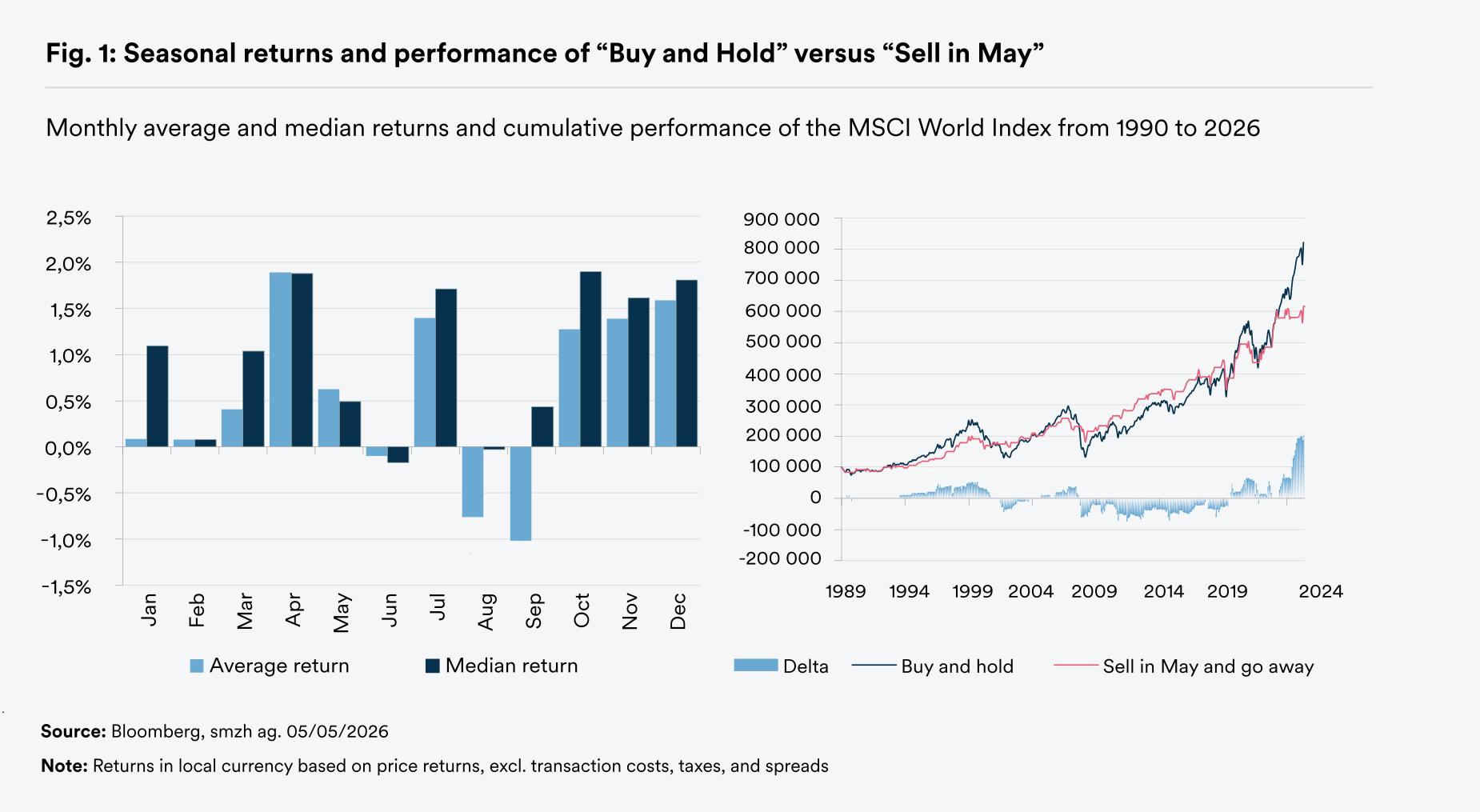
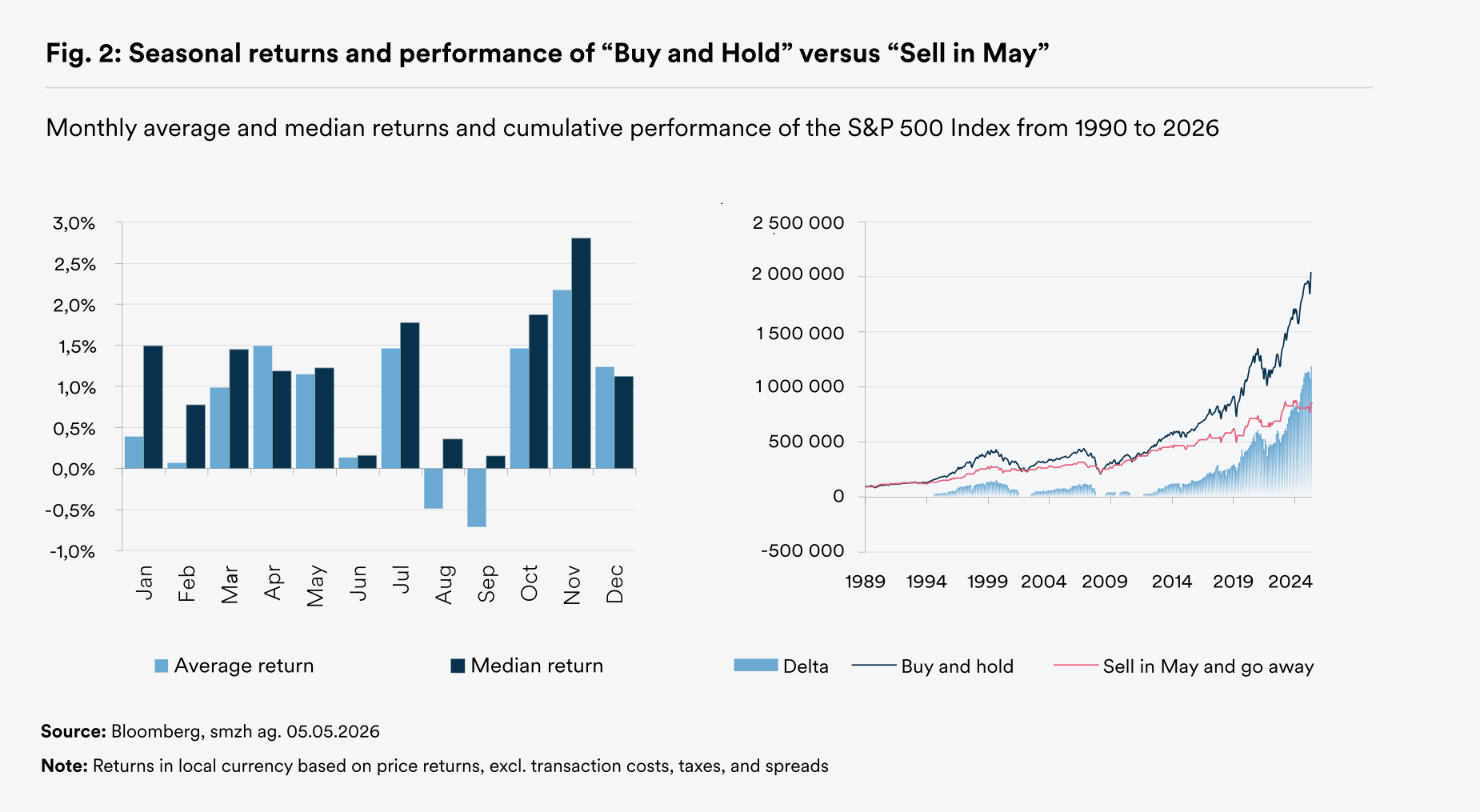
Fig. 1
Fig. 2
Fig. 3

Statistics are not the same as strategy

The data paint a nuanced picture. August and September are consistently the weakest months of the year: across all three indices, the average returns in these months are around -0.5% to -1%. However, this does not establish a consistently negative pattern. There are numerous years with clearly positive summer phases, which can be decisive for long-term performance. This matters because equity returns are typically asymmetrically distributed: a few strong months account for a significant portion of total returns. Not being invested during these months risks losing returns permanently.

The timing of this trend is particularly relevant. For the S&P 500, the cumulative underperformance of the sell-in-May strategy versus buy-and-hold accelerated sharply from 2009 onward. Since then, the strategy has clearly lagged in many market phases. For the SMI, this effect is less pronounced, suggesting differences in market structure and sector weighting. Overall, the strategy has lost statistical robustness over time. This may be due to a structurally different liquidity regime, the extremely loose monetary policy after the 2008 financial crisis, the strong role of central banks as market stabilizers, the expansion of passive investment vehicles, or the higher speed of market reactions due to algorithmic trading and broader information transparency.

Structural assessment

The appeal of seasonality lies in its simplicity. A clear rule for a complex system seems intuitively plausible. This, however, is also its weakness. Several structural reasons argue against the reliable implementation of the strategy.

  • First, seasonal patterns are unstable. Capital markets do not follow stable calendar rules, but are driven by fundamental factors, especially regime shifts, growth, inflation, corporate earnings, liquidity, and monetary and fiscal policy.
  • Second, known anomalies can be eroded through arbitrage. In other words, the more widely a market anomaly is known, the more market participants try to exploit it, and the faster it disappears. The increased market transparency and algorithmic trading systematically diminish its exploitability.
  • Third, the strategy is not cost-free in practice. Even though this analysis did not factor in transaction costs, taxes, or spreads, these would further reduce the relative appeal of “sell in May and go away.”

Therefore, what matters is not whether a pattern statistically exists, but whether it remains stable, consistent, and economically exploitable after costs over time. A mere statistical tendency is insufficient to provide an answer.

What this means for investors

For a sustainable investment strategy, several criteria are central: robustness over time, stability across different market regimes, and a convincing risk-return profile after costs. “Sell in May and go away” does not sufficiently meet these requirements.

Long-term investment success generally does not come from tactically exiting the market, but from consistent exposure to long-term risk premia. Seasonality patterns can serve as an additional observation, but do not form the basis for strategic allocation decisions.

Therefore, the key conclusion is: Not every statistical anomaly is investable. For a robust allocation strategy, fundamental factors are crucial: valuation levels, profit growth, liquidity conditions, and macroeconomic regimes. These provide a more consistent decision-making basis than calendar-based patterns. “Sell in May and go away” is thus one of the historically observable patterns, but in practice is usable only to a limited degree but not a robust allocation rule.

All information is provided for general purposes only and does not constitute investment advice.

Author:
Bekim Laski_Avatar.png

Bekim Laski

Chief Investment Officer und Partner
Share on: