smzh blue logo
Pension
Finance

What Should Your Assets Do for You After Retirement?

Artikel
14 Sep 2026
smzh-image

Pension or lump sum is a question about how you draw your money. Before that comes a more important decision: which parts of your later life should be reliably funded – and where do you want to deliberately preserve flexibility?

When the last paycheck arrives, your assets take on a different job. What you spent decades building suddenly has to do several things at once: cover ongoing expenses, create reserves, stay accessible, and last for many years.

That may sound obvious. In practice, though, this sequence is often skipped. The conversation starts with pension or lump sum, with taxes, or with the pension fund. Yet every one of those decisions depends on what the money will actually be needed for.

What retirement planning is really about

Retirement is not about having the largest possible benefits on paper. What matters is whether your ongoing expenses are covered for the long term while enough maneuvering room remains alongside them.

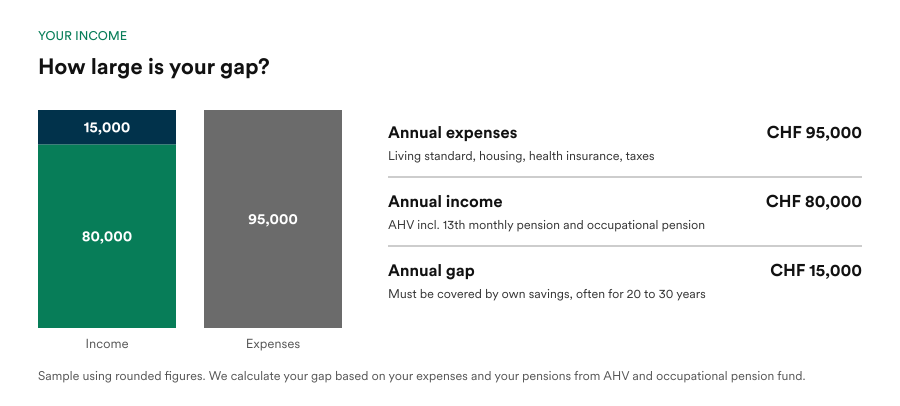
Ongoing expenses typically include housing, health insurance, everyday living costs, existing obligations and, depending on your situation, taxes. Alongside these sit expenses that are not needed every month but shape your standard of living: travel, support for family, larger purchases, renovations, or reserves for later care and assisted-living needs.

The distinction looks simple. In practice, though, it determines how every other question should be judged. People who want to fund everything with guaranteed income often tie up more capital than necessary. Those who want to keep everything flexible shift a large share of their standard of living onto their assets and onto investment risk.

That is why good planning does not start with a product. It starts with an order of priorities: What has to flow reliably? What can stay flexible? And what role should AHV (state pension), the Pensionskasse (occupational pension fund), Pillar 3a, freely available assets and home ownership each play?

Only on that foundation do the questions of payout form and taxation really make sense.

Not every benefit serves the same purpose

AHV and the occupational pension fund create predictable, ongoing income. Freely available assets, Pillar 3a, vested-benefits accounts or a property, by contrast, primarily create availability, reserves and room to maneuver.

That does not make one form better than the other. It simply means they serve different purposes.

Focus exclusively on security, and you risk converting too much capital into lifelong income. Focus exclusively on flexibility, and you have to accept that a larger share of your later standard of living will depend on your assets, your discipline and how markets perform.

So the central question is not: Which one pays more? It is this: which parts of your future life should be secured month after month, independent of markets and of decisions made later – and where is flexibility explicitly what you want?

The timing of retirement is decisive

The date you step back is also more than a personal preference. Early retirement, phased retirement or working beyond the reference age all shift income, pension benefits, taxes and liquidity at the same time.

That is why it pays not to look at leaving working life in isolation. Retiring early does not just mean funding additional years without employment income. Benefits from AHV and the occupational pension fund frequently change as well.

Conversely, a phased retirement can do more than ease the transition. Depending on your situation, it can also create more room to maneuver on taxes and withdrawal planning.

The later these questions get asked, the less room to maneuver is left.

When retirement benefits can be drawn

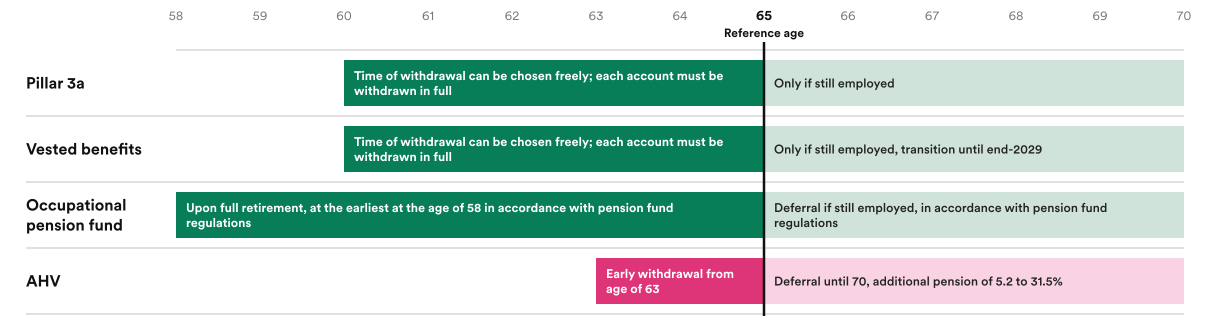
Sound planning also covers a question that is often decisive: when is each pool of money actually available? AHV, the occupational pension fund, vested-benefits accounts and pillar 3a do not follow the same rules.

Without clarifying this early, it is easy to plan around assets that are not yet accessible at the moment you need them – or to overlook flexibility that could be valuable for staggering withdrawals and managing taxes.

Balkendiagramm der Bezugsfenster für Altersleistungen: 1. Säule (AHV), 2. Säule (Pensionskasse), Freizügigkeit und Säule 3a zwischen Alter 55 und 70, mit Vorbezug, ordentlichem Rentenalter 65 und Aufschub.
Withdrawal windows of AHV, occupational pension fund, vested benefits, and pillar 3a – schematic visualization.

The chart shows these withdrawal windows schematically. What is binding in every case is the regulations of your specific pension institution and your personal circumstances. The overview still matters for planning, because it makes visible when decisions need to be prepared and when options disappear.

Why timing matters

If you do not clarify early when which assets are available, you risk planning using assets that may not be available in a given key moment – or you fail to see leeway that might be valuable in terms of staggering withdrawals and taxes.

Pension or lump sum is a follow-up question

Only once ongoing expenses, available flexibility and withdrawal timing are in order can the pension-or-lump-sum question be judged sensibly.

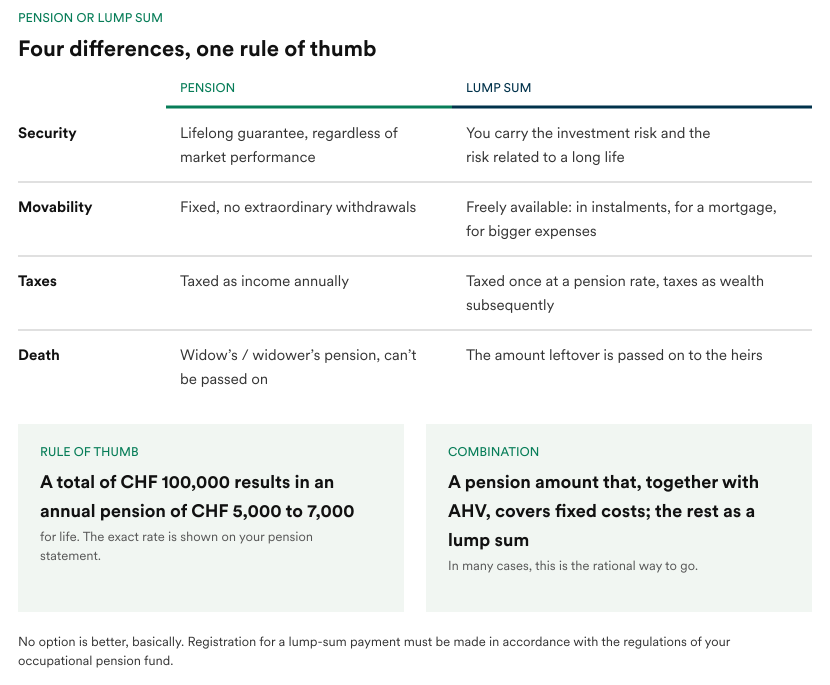
A pension creates predictability and reduces your dependence on investment decisions made later. A lump sum preserves availability, the ability to pass assets on, and, in some circumstances, options for tax planning.

What is decisive is how the other building blocks look. Are there enough freely available assets? Is there home ownership? How important is ongoing security? How much flexibility will you want later? And who will be making investment and withdrawal decisions at 80 or 85?

That last point matters especially, because in later life assets mean not only freedom but also responsibility. This is why combining a pension with a lump sum is, in many cases, not a compromise but a considered answer to the different roles assets have to play.

Your home is an asset – but not automatically liquidity

If you live in your own house or apartment, a considerable share of your wealth is often tied up there. That can stabilize your housing situation in later life. At the same time, those assets are not readily available.

Retirement also changes the financing picture. Employment income stops or drops, while mortgage interest, maintenance and future renovations remain. When a mortgage is extended or restructured, affordability can therefore become an issue again. What counts at that point is not just the value of the property, but the income actually available after retirement.

The obvious answer is often: pay down as much as possible. That is not automatically the best solution either. Every franc put into the property is a franc unavailable as a freely accessible reserve. A smaller mortgage reduces interest costs and interest-rate risk; too little liquidity, on the other hand, can constrain your financial flexibility in daily life, during renovations or when unexpected expenses arise.

This trade-off becomes especially clear when pension-fund capital is to be used for amortization. Ongoing costs can come down as a result. At the same time, retirement assets become locked into the property and are no longer available for other purposes. Depending on the form of withdrawal, the later pension-fund annuity will also be lower.

So the real question is not whether your home should be debt-free by retirement. It is what balance between mortgage, housing costs and freely available assets fits your own situation.

What gets overlooked alongside the form of withdrawal

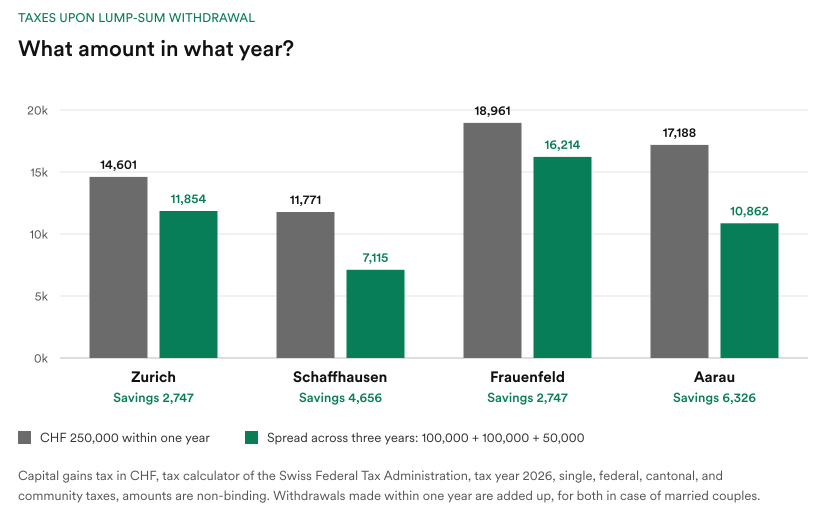
Taxes are part of the picture. Drawing from several retirement vehicles across different years can make a difference. The same applies to phased retirement and staggered withdrawals. And family circumstances belong here too. For couples, many questions look different than they do for individuals. The same holds where there are support obligations, estate wishes or health considerations.

Retirement planning is therefore not an isolated pension question. It connects income, assets, taxes, housing and personal plans for life.

How to recognize good planning

In the end, good planning delivers more than a recommendation on how to take your money. It answers three more practical questions: What will support your later standard of living? How much freedom will you keep? And which decisions need to be prepared in advance?

Being able to answer these questions gives you more than clarity about numbers. It often changes how you see your own assets.

Perhaps that is the decisive insight: retirement is not the moment when assets are simply paid out. It is the point at which it becomes visible how well your assets, your income and your life actually fit together.

And that is exactly why planning pays off earlier than it first appears.

A conversation provides context

Anyone who engages with these questions usually notices quickly that the individual technical terms are not the hard part – how they interact is.

A conversation can help you put your own situation in context, with a view to benefits, asset structure, tax consequences and the sensible next steps.

Because good retirement planning answers more than what is possible. It also shows what each piece is meant to do. If you would like to put your situation in context, let us look at it together.

Would you like to gain clarity regarding retirement? We help you do so!

We take a holistic look at your situation – benefits, wealth structure, withdrawal times, tax impact – and show you what decisions need to be prepared at what time.

Make an appointment
Author:
smzh-image

Burak Er

Head Research & Advisory Solutions
Share on: