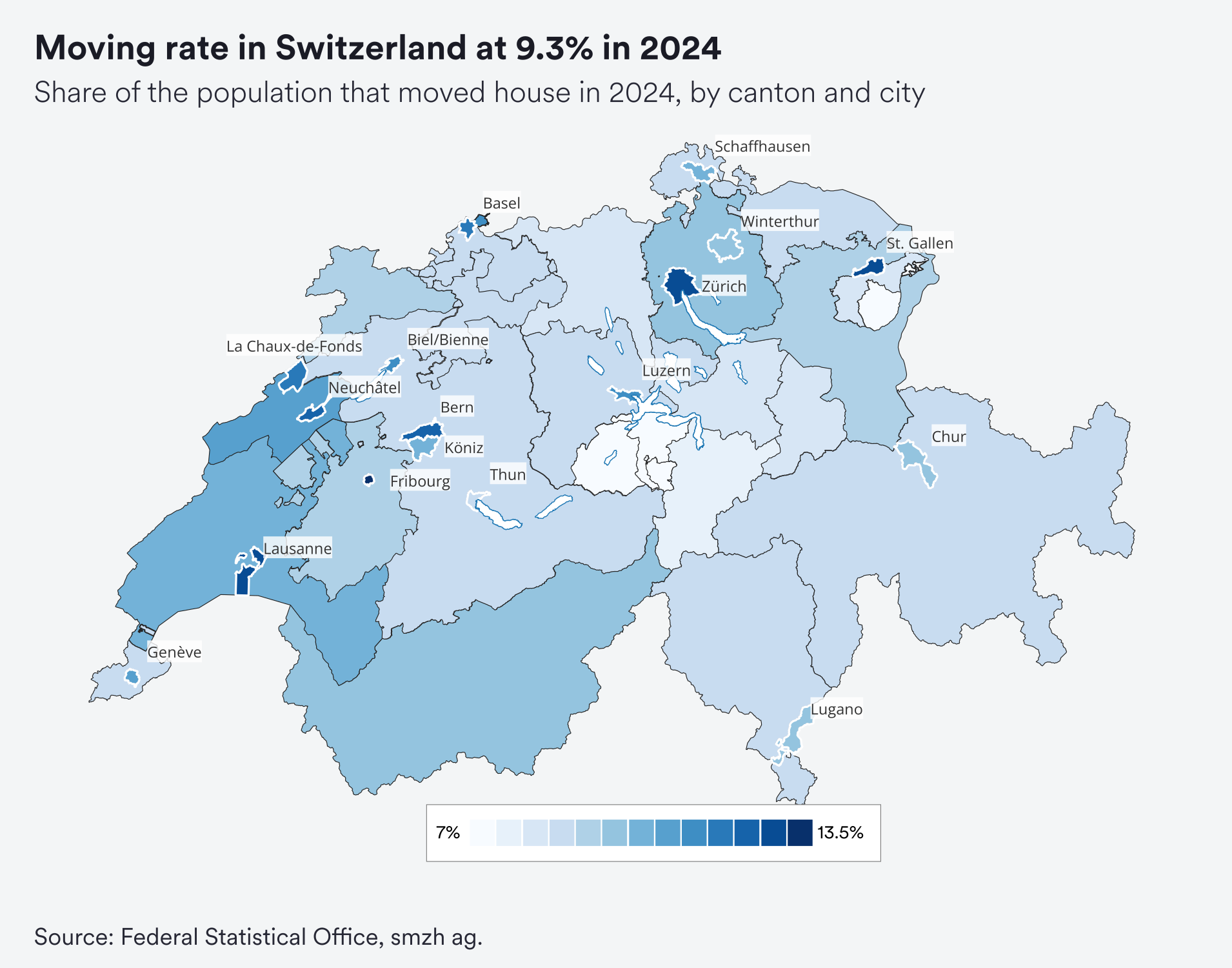
Diminishing tenant mobility in Swiss cities
Mobility traditionally is higher in urban regions than in rural areas. Nevertheless, a significant decline in mobility can also be observed in cities. This trend is particularly pronounced in smaller cities, where the migration rate has dropped more sharply than average since 2019. Rising rents and low vacancy rates are causing households to avoid moving more frequently and to maintain their existing living situations for longer.
This decline in market mobility is not limited to the housing market. It impedes the spatially efficient allocation of labor, leads to longer commuting distances, and hinders the integration of immigrants. At the same time, existing infrastructure is subject to greater strain, while adjustments to changing needs occur more slowly. These macroeconomic effects increase political pressure to act and, in the long term, also have a negative impact on investment conditions in the real estate market.
Indeed, there is significant activity at the political level. Last year, voters in the cantons of Zurich and Bern addressed the issue of creating more affordable housing. While the people of Zurich voted in favor of increasing cantonal funding for housing promotion, voters in the canton of Bern approved an initiative aimed at curbing abusive rent increases.
Popular vote on "No to a 10 million Switzerland”
This year, a national referendum is coming up: The “No to a 10 million Switzerland” initiative is set to be a key political turning point for the Swiss real estate market in 2026. The proposal would limit the growth of the permanent resident population to a maximum of ten million people by 2050, directly intervening in the long-term demand dynamics of the housing market.
After a deliberate decision to forego a counterproposal, the vote will become a fundamental question about Switzerland’s future growth logic. While population growth supports the labor market, value creation, and fiscal revenues, it simultaneously exacerbates excess demand in the housing market, where supply, densification, and construction activity structurally cannot keep pace. This resulting pressure on rents, property prices, and infrastructure is immediately tangible for households and shapes public perception more strongly than long-term gains in prosperity.
Risk for the real estate sector
Regardless of the outcome, the initiative represents a significant political risk for the real estate sector. It clearly demonstrates that immigration, housing demand, and rent development are increasingly becoming political issues that directly influence strategic decision-making. For investors, the focus shifts from short-term market dynamics to the growing uncertainty surrounding the long-term framework for demand, regulation, and location attractiveness.