
smzh blue logo
Finance
Investments
Mortgage

SNB leaves key interest rate at 0.00% again

Artikel
10 Dez 2025
smzh-image

The Swiss National Bank (SNB) has once again maintained its policy rate at 0.00%. Despite the weakening economy, it continues to see no sufficient reason to return to negative interest rates. Although the Swiss economy contracted by 0.5% in the third quarter of 2025 compared to the previous quarter, the recently agreed reduction in US tariffs is expected to stimulate growth in Switzerland’s gross domestic product (GDP) over the coming quarters even if overall economic output will likely remain below the long-term average.

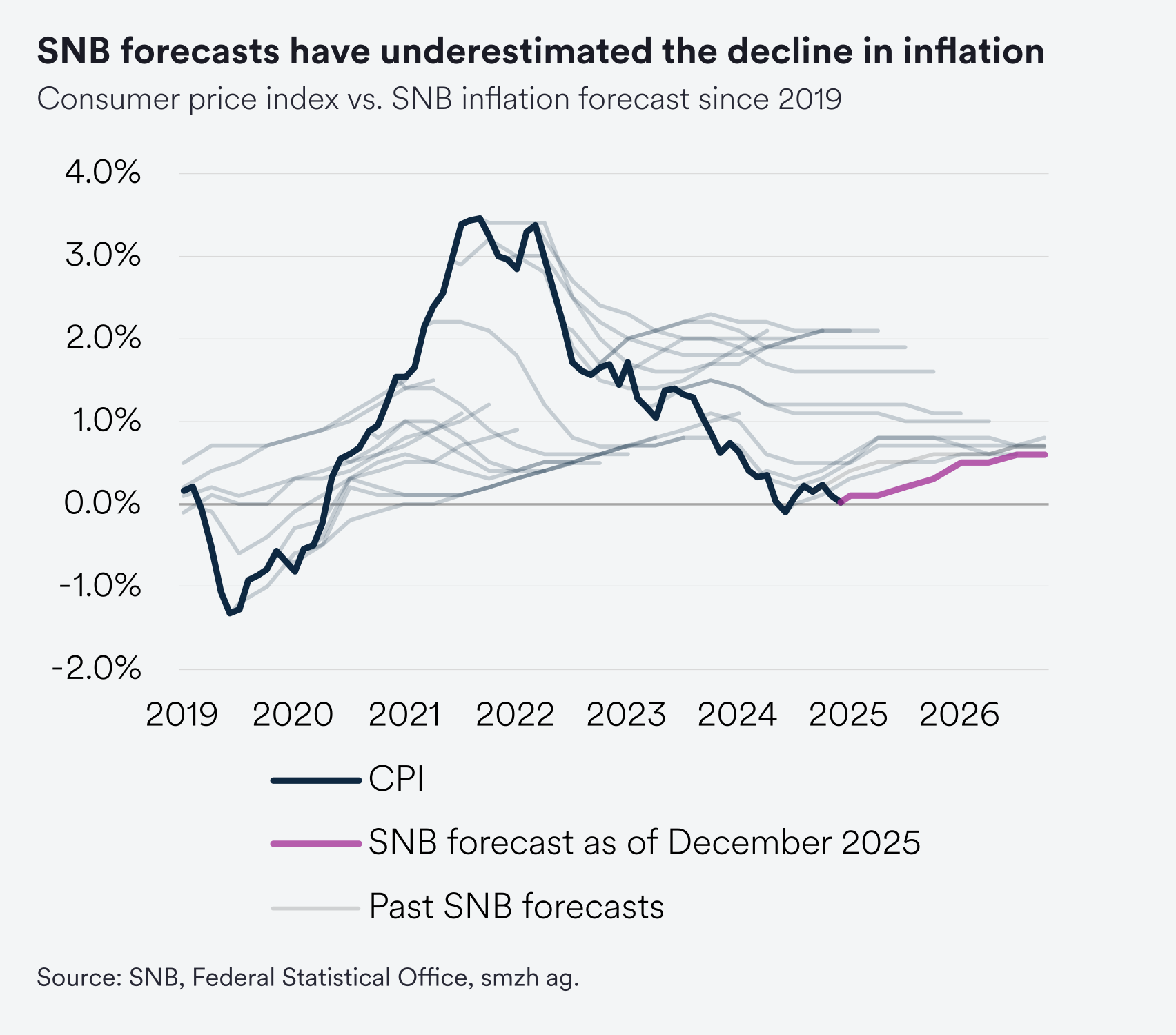
At the same time, the global economic environment remains tense, and Switzerland experienced negative monthly inflation rates in the second half of the year. Most recently, annual inflation stood at 0%. Nevertheless, the SNB does not see any pronounced deflation risks, even though its previous inflation forecasts underestimated the decline. Accordingly, it has refrained from further rate cuts. Instead, the SNB is likely to intervene in the foreign exchange market only selectively should the Swiss franc appreciate sharply.

SNB monetary policy not under pressure yet

Despite weak economic activity and the renewed possibility of negative inflation, the SNB currently sees no urgent need to return to negative interest rates, as it continues to consider price stability to be guaranteed in the medium term. At the same time, small rate cuts into negative territory are viewed as being limited in effectiveness, while their side effects would likely increase. From a monetary policy perspective, this results in a high threshold for intervention: the SNB will either maintain its wait-and-see approach for longer or respond with a more substantial 0.5% rate cut if the situation were to deteriorate significantly.
test

Market response

The immediate response in financial markets has been muted. Both the yield curve and the Swiss franc remain virtually unchanged compared to the previous day. Equity markets have also shown little response to today’s interest rate decision, with the Swiss stock market edging lower, in line with a generally weak opening across equity markets.

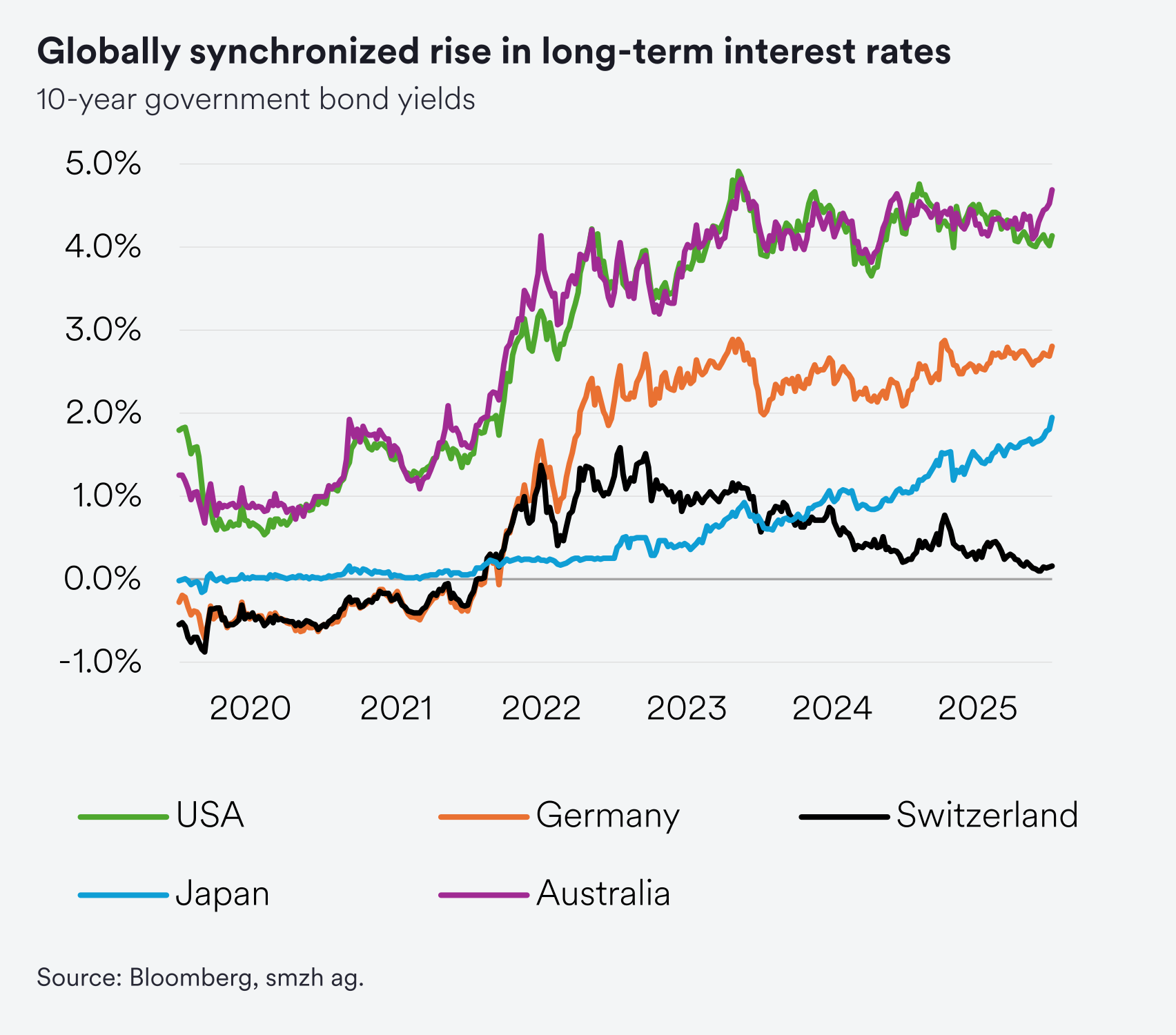
Diverging monetary policy, but synchronized increase in rates at the long end

While Switzerland remains in a low-interest-rate environment, the Fed is debating the appropriate pace for possible rate cuts. In the Eurozone, calls for potential rate hikes are emerging once again. As a result, monetary policy paths continue to diverge. At the same time, however, all major economies are more or less affected by the rise in long-term interest rates. Notably, movements at the long end of the European yield curve are currently having the strongest impact on Swiss interest rates. The key question is whether Switzerland can maintain its special status as an “interest rate island” or if sustainably higher long-term interest rates will also take hold domestically.

test

Comment of Bekim Laski, CFA, CIO

The Swiss franc is finding itself in a dilemma: on the one hand, its high valuation leaves it vulnerable to corrections; on the other, its reputation as a safe haven continues to shield it from more pronounced weakness. Recently, the Swiss franc has been increasingly driven by global trends rather than domestic fundamentals. With the end of the synchronized rate-cutting cycle in 2026, the monetary policy landscape will become increasingly fragmented: the Fed is expected to continue lowering rates moderately, while the European Central Bank (ECB) and the Bank of England are likely to pause, though the ECB could implement a slight hike by year-end. The Bank of Japan, meanwhile, is continuing its normalization path. Switzerland remains a monetary policy outlier, with its key rate still at zero and the SNB acting cautiously. As a result, the franc lacks clear directional drivers, but is nevertheless expected to remain relatively strong in 2026.

Comment of Burak Er, CFA, Head Research & Advisory Solutions

The SNB is currently in a monetary policy comfort zone. Despite below-average economic growth and low inflation, which may dip into negative territory again next year, the immediate pressure for further easing remains limited. Clear signs of pronounced deflation or a significant economic downturn, which are not yet sufficiently evident, would be necessary to prompt a response. Should such signals become more apparent, the SNB would likely react with a substantial rate cut of 0.50 percentage points. Accordingly, a return to negative interest rates next year cannot be ruled out.