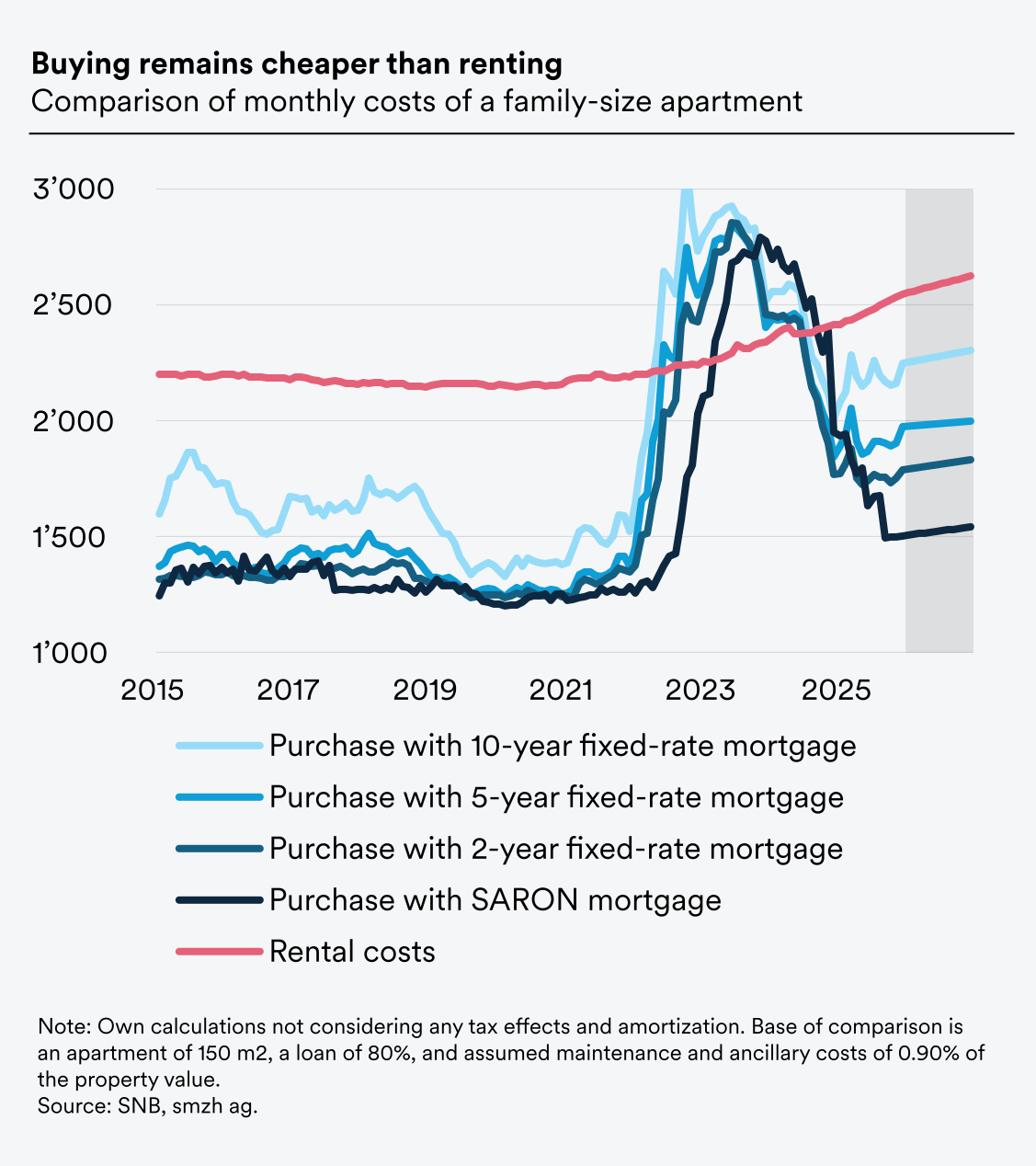
We currently do not expect either a key interest rate hike by the SNB in the year ahead or, by extension, any substantial increase in rates for long-term fixed mortgages. Combined with the persistent shortage in the rental housing market and further rising rents, home ownership is likely to retain its cost advantage over renting.
Transaction activity increases further
Thanks to stable interest rates and the increased attractiveness of home ownership, more buyers are again entering the market. The fact that these buyers are both willing and able to pay the asking prices is evident in a higher number of single-family houses and owner-occupied apartments sold in 2025. At the same time, prices have continued to rise.
Overall, this is a positive sign for the market: buyers and sellers are finding each other more frequently again, increasing overall market liquidity. Currently, demand exceeds supply, which is reflected in rising prices. If this imbalance persists, as has been the case in the past, property prices are likely to continue to rise steadily.
Bank financing is becoming a structural hurdle
On the demand side, the market continues to be supported by a solid economic development and ongoing immigration. Although both factors have weakened somewhat, they remain effective overall, which is why risks on the demand side appear to be limited. Rather, the main hurdle is shifting to financing: in many instances, purchases fail not due to a lack of buyer interest, but because banks do not grant the desired mortgage amount.
When prices rise faster than incomes and savings
If property prices rise faster than incomes and savings, fewer buyers inevitably meet the criteria to secure a mortgage. Since the pandemic, property prices based on transaction price indices have increased by around 20 to 40% depending on the region. This development is clearly decoupled from the wage growth of most Swiss households.
This is not only frustrating for savers, whose capital barely grows with interest rates near zero, but also has a direct impact on bank financing. Many potential buyers mistakenly assume that banks generally finance up to 80% of the purchase price. They set their savings goals for home ownership accordingly.
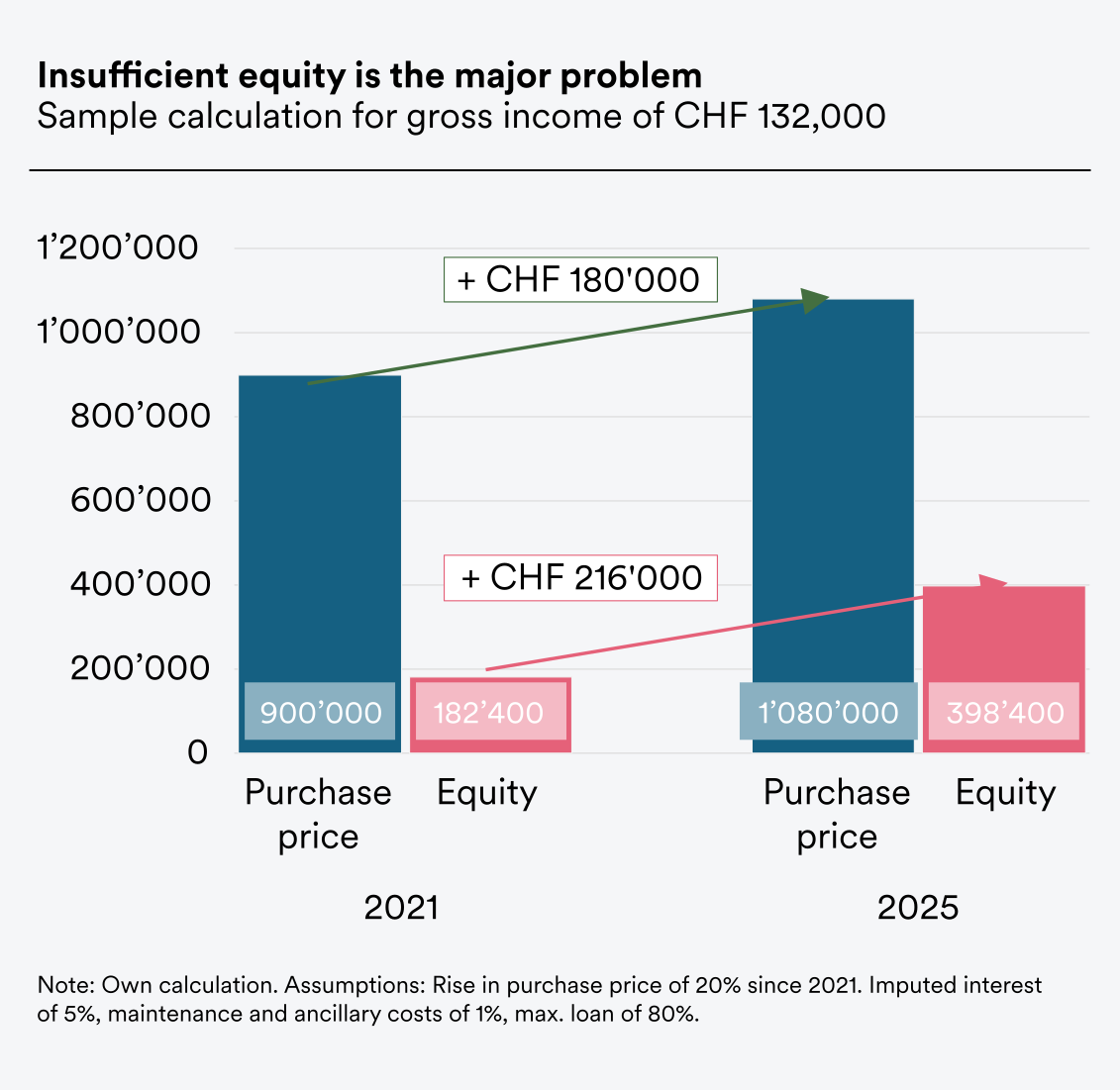
If the same property now costs around 20% more, a proportionally higher amount of equity is not sufficient. If income remains unchanged, the price increase of around CHF 180,000 cannot be covered largely by a higher mortgage, as the affordability is no longer met from the bank’s perspective. Instead, not only must the full additional price, but also an extra amount be covered by additional equity. This is because the higher purchase price leads to higher imputed maintenance and ancillary costs, further reducing the maximum acceptable mortgage amount.