The ongoing war in Iran continues to keep the world in suspense. At present, no end to the conflict is in sight, and uncertainty remains high on financial markets. With this update, we provide an assessment of what is known, what remains unclear, and why a calm, measured approach is still the right response.
A region of central importance for global energy policy
Financial market concerns are primarily focused on global energy supply, as the conflict affects a region that is a major hub of the global energy architecture. More than 25% of the world’s seaborne oil trade and around 20% of globally traded liquefied natural gas (LNG) passes through the Strait of Hormuz. Iran also possesses the world’s second-largest gas reserves and fourth-largest oil reserves, further underscoring the region’s strategic significance.
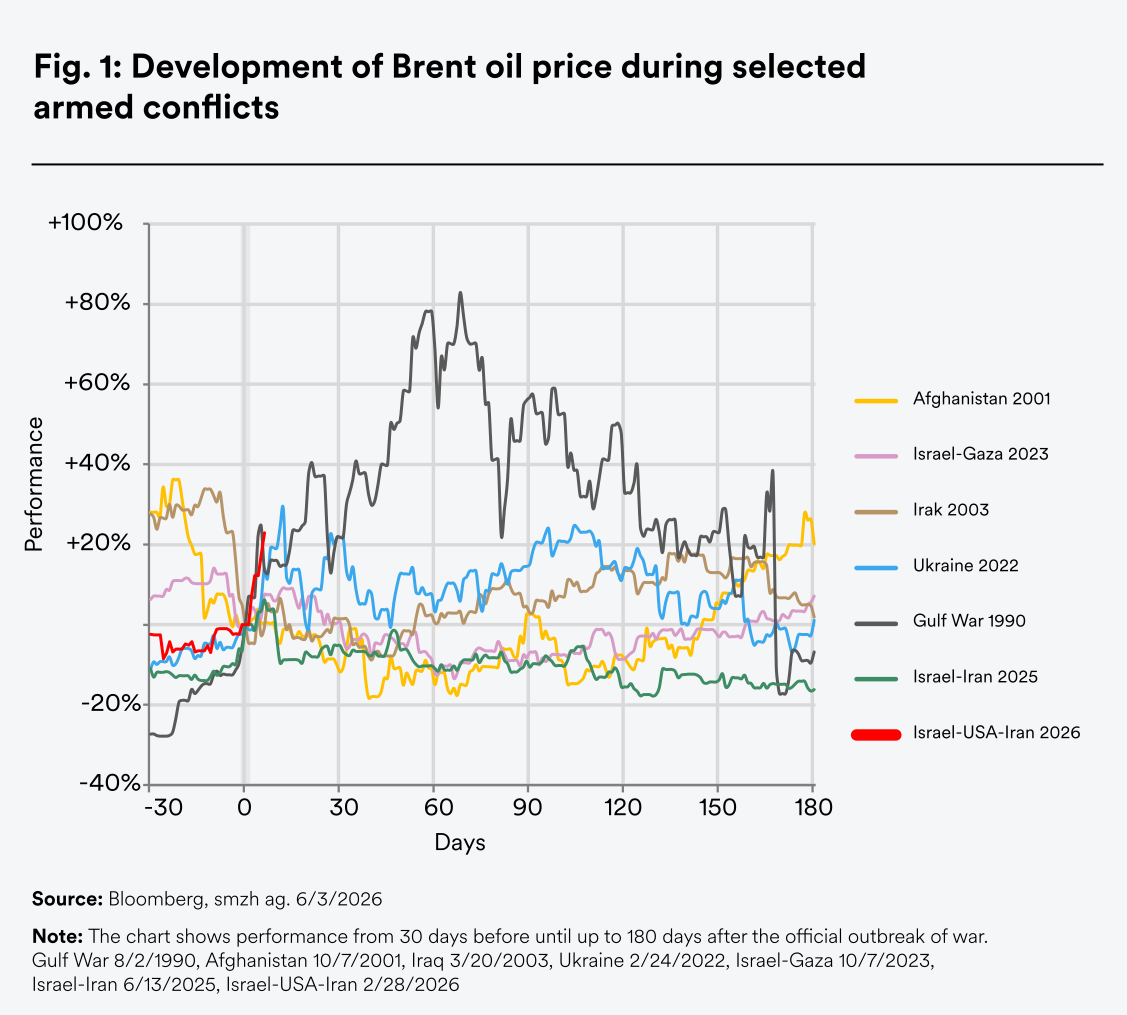
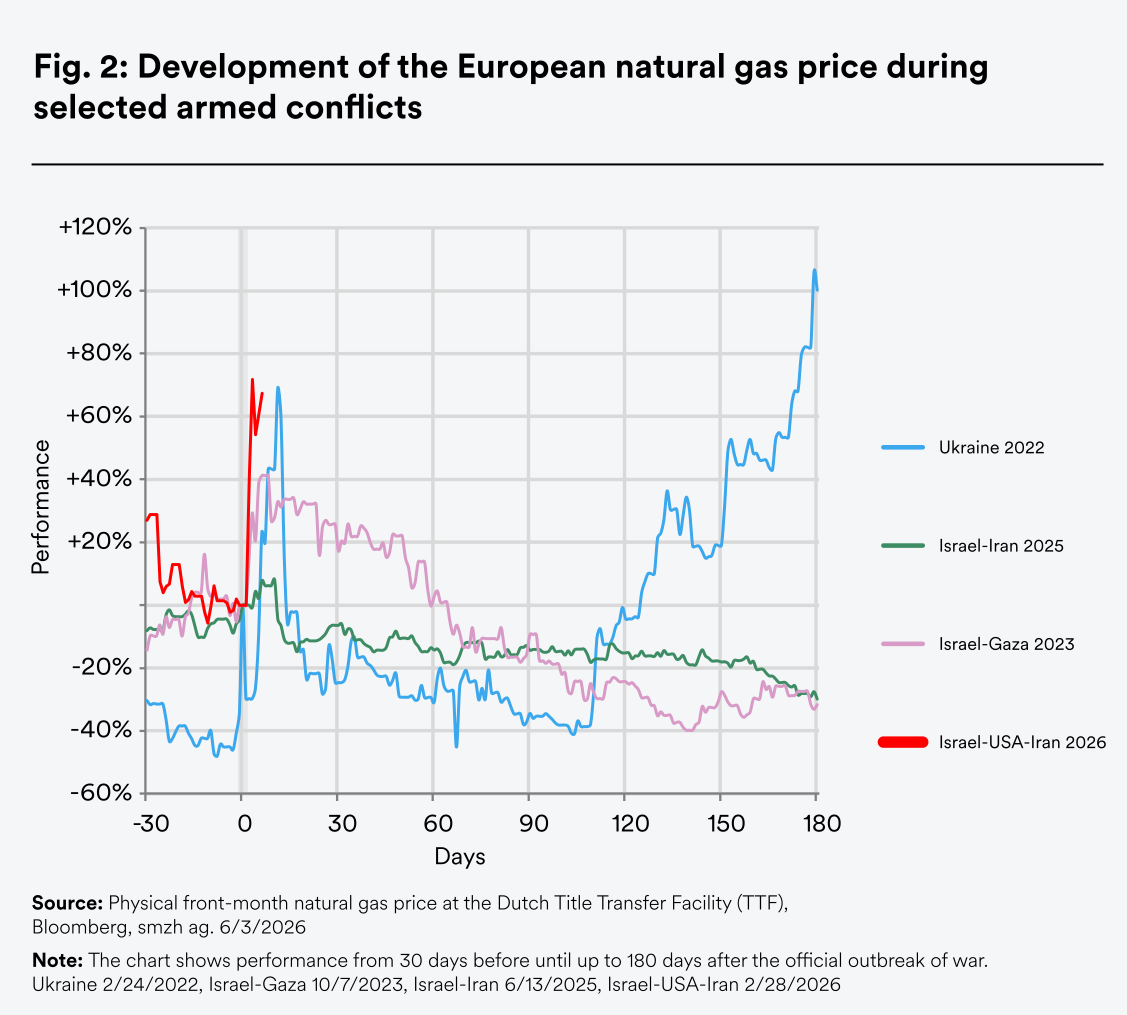
The largest recipients of these energy flows are Asian economies, while the European Union is also among the world’s largest importers of energy. However, the fossil fuel intensity of many economies has been declining for some time, meaning that today, one unit of economic output consumes less energy than before, reducing vulnerability to oil price shocks. Europe’s currently low natural gas storage levels increase its susceptibility to an LNG price shock, although the current spike in gas prices is less than was seen during the 2022 energy crisis.
What we know and what remains unclear
Leading Iranian military and government officials were killed in the first attacks. The regime is now fighting for survival. Beyond these facts, the situation remains extremely unclear. Even if a conflict initially appears limited, it can quickly develop its own momentum that extends beyond the original objectives.
Warfare is never linear – it is shaped by unintended and hard-to-predict consequences. It is therefore almost impossible to make precise forecasts about the duration, scope, and economic impact of this conflict.
The limits of comparisons and forecasts
Two tools help to analytically frame uncertainty: scenario analyses, which model different conflict outcomes and their economic consequences, and historical comparisons with previous geopolitical shocks.
Both approaches are useful, but each has limitations. Economic cycles never repeat in exactly the same way. The decisive factors are primarily the interplay of three elements: First, the monetary policy context – whether central banks still have room to respond; second, valuation levels on financial markets – which determine their vulnerability to corrections; and third, the degree of energy dependence in the affected economies, which decides how severely an energy price shock will impact the real economy. Additional factors include seasonality, geopolitical alignments, and regulatory and technological starting points. Historical patterns can provide guidance, but cannot replace a current situational assessment.
Base case: short conflict, limited damage
Most scenario models currently assume the conflict will be relatively short. In this case, the impact on inflation would likely remain moderate, possibly in the range of 0.2 to 0.3 percentage points. As many economies still have some excess capacity, the effect on global growth would be limited, likely between 0.1 and 0.3 percentage points. The United States and Switzerland would be at the lower end of this range, while the Eurozone would be more affected due to its greater energy dependence. Central banks would likely consider such an inflation rise as temporary and would not respond with monetary policy measures.
Negative scenario: escalation with structural consequences
A prolonged conflict causing serious damage to production or transport infrastructure would be qualitatively different. In this situation, it would no longer be about temporary price spikes, but rather a lasting disruption of global energy flows. Both inflation and growth would be significantly more affected, risk premiums in capital markets would rise sharply, and political responses such as sanctions or export restrictions could further exacerbate the situation. In this scenario, central banks would also be faced with tougher decisions: balancing rising prices on one side and weaker growth on the other.
Looking to history: careful assessment
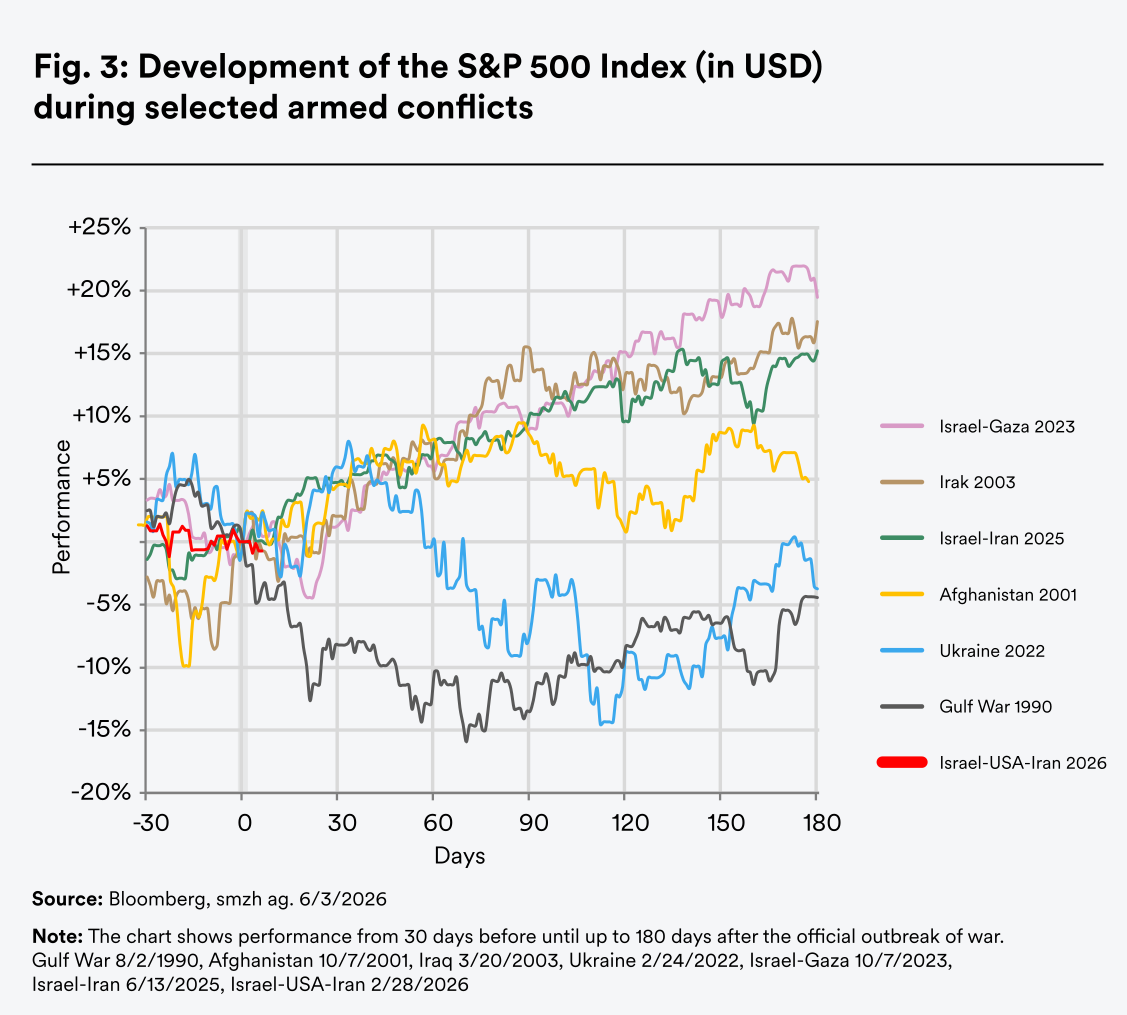
Previous geopolitical shocks show a recurring pattern: after an initial market drop, stabilization has often followed. In several historical instances, equities recovered within three to six months. This is a relevant observation, though it is no guarantee. What distinguishes the current conflict from many previous ones is the structural importance of the affected region for global energy supply. How quickly stabilization occurs now will depend less on historical patterns and more on how clearly and credibly the ongoing developments can be assessed.