
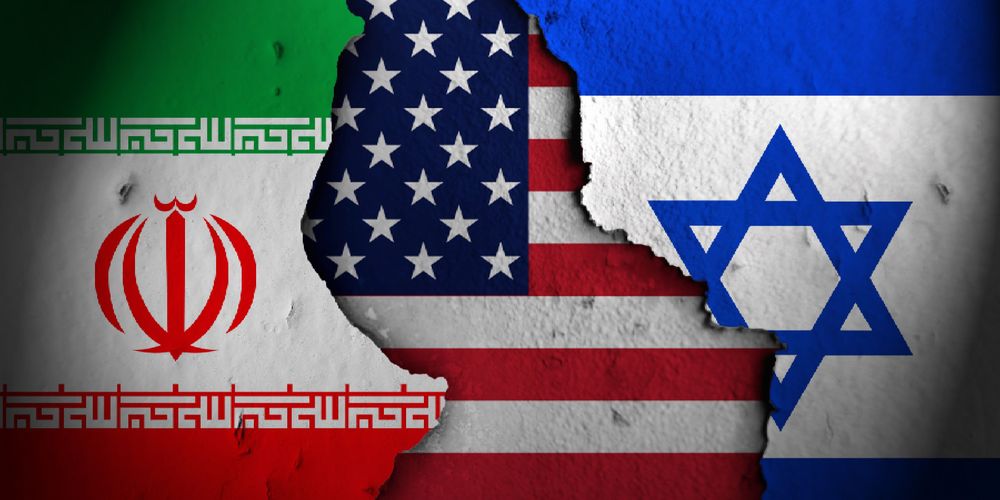
The US-Israeli attacks on Iran and Iran’s swift retaliatory actions have plunged the Middle East into war. The strikes also appear to be aimed at provoking a change in leadership. While the situation remains opaque, it is reported that Supreme Leader Ali Khamenei and President Masoud Pezeshkian are among the individuals who have allegedly been killed. Tehran has also confirmed the death of a senior advisor to Khamenei and the commander of the Revolutionary Guard.
Although Khamenei’s death is highly significant, it does not necessarily mark the end of the Islamic regime. While the Supreme Leader was the ultimate authority, he was not the only one. Political observers believe that succession plans have been in place for years. In addition, the Revolutionary Guard is deeply embedded in political, economic, and security-related structures. Targeted elimination of its leadership would weaken the organization, but not destroy it entirely.
The scope of the conflict appears substantial, and it could last longer and be more intense than the twelve-day conflict in June last year. The main risk for the global economy is related to oil supply, energy prices, and the possibility of further regional escalation.
The following answers address the most important questions for Swiss investors.
1) What immediate reaction can be expected on global financial markets on Monday?
In the short term, we anticipate a flight to safe-haven assets, resulting in higher prices for gold, high-quality government bonds, and a stronger Swiss franc. Risk assets, such as equities and high-yield bonds, are likely to see weaker and more volatile performance. Meanwhile, energy and oil prices are expected to open higher due to anticipated supply and transport risks. Analysts currently expect crude oil prices to rise by up to USD 10, representing a percentage increase of up to 15%. Financial markets will focus attention on the Strait of Hormuz, through which roughly one fifth of global oil and liquefied natural gas (LNG) is transported.
The Saudi Arabian stock index opened approximately 5% lower on Sunday, but recovered most of these losses throughout the trading session. Bitcoin rebounded quickly after initial losses on Saturday, and by Sunday was trading slightly higher than on Friday and Saturday.
2) What is the Strait of Hormuz and why is it considered a critical vulnerability?
This maritime passage is vital, shipping around 20% to 25% of global oil and LNG exports. Because there are few equivalent alternative routes for Gulf producers, any blockage or disruption of passage would quickly lead to price spikes for oil and gas. As a result, the Strait of Hormuz is considered a critical vulnerability for global energy supply.
Iran exerts significant strategic influence over this waterway. According to reports, several oil companies and major trading firms suspended their oil and fuel shipments through the Strait of Hormuz within minutes of the US attacks. While Iran has never completely closed the passage – and such action is viewed as infeasible – the country has attacked oil tankers and laid mines in its waters in the past. Any form of disruption would create substantial risks and result in higher transport insurance premiums and rising oil and gas prices, as shipments would need to be rerouted.
3) What role does Iran play in the global oil market?
According to estimates, Iran produces about 3.4 million barrels of crude oil per day, covering roughly 4% of global oil supply. The country exports between one and two million barrels daily, with the majority of these sanctioned deliveries destined for China.
A temporary outage of Iran as a producer would therefore directly affect global oil supply. However, OPEC countries could partially offset this loss by ramping up production and exports. Initial steps in this direction were already taken by OPEC on Sunday.
4) Have past military conflicts had lasting effects on the global economy and financial markets, and is this time different?
Wars and armed conflicts inflict human suffering and have profound ramifications on many levels. For financial markets, military conflicts typically cause only temporary shocks, as long as they remain geographically contained and do not cause lasting disruptions in energy supply. However, this time the risk is more difficult to assess, as a major energy producer and a critical transport route are directly affected. Whether the impacts will be long-lasting critically depends on whether the conflict can be contained quickly or if there is a prolonged interruption of oil and gas shipments through the Strait of Hormuz.
5) What does this mean for me as an investor? Should I sell my investments?
Experience shows that panic selling immediately after shocks often proves to be a mistake, as market reactions can be exaggerated in the short term and later normalize. For long-term-oriented investors, it is generally advisable to review your current allocation to ensure it aligns with your goals and strategy, while emphasizing diversification and quality. Selling off your entire portfolio would significantly increase reinvestment risk and should only be considered in rare cases after individual consultation.
6) Is now a good time to enter the financial markets?
Geopolitical shocks often present attractive entry opportunities. However, these should always be consistent with your individual risk profile and long-term investment strategy. It is not possible to reliably assess whether this is currently a favorable entry point, given the uncertainty around further military and political developments. Investors considering investments may want to take a staggered approach, investing in multiple tranches with clear risk budgets – instead of waiting for the proverbial perfect timing.
7) How is my smzh Invest portfolio structured?
We are monitoring the current situation closely. smzh Invest portfolios are broadly diversified across asset classes such as equities, fixed income, real estate, and gold. There is no reason to rush to action at this time – each portfolio is fully aligned with its risk profile and defined strategy