The geopolitical situation has escalated significantly following the US and Israeli military strikes against Iran at the end of February. With the blockade of the Strait of Hormuz, inflation risks have once again come into sharper focus. Nevertheless, at its March 19 meeting, the Swiss National Bank (SNB) saw no reason to raise interest rates.
Even so, first calls for the SNB to hike rates by year-end are emerging. For many SARON mortgage holders, this raises the question of whether they should act now before rates rise again, as experienced in 2022/2023. While this concern is understandable, it is often too simplistic.
Does it make sense to switch to a fixed-rate mortgage?
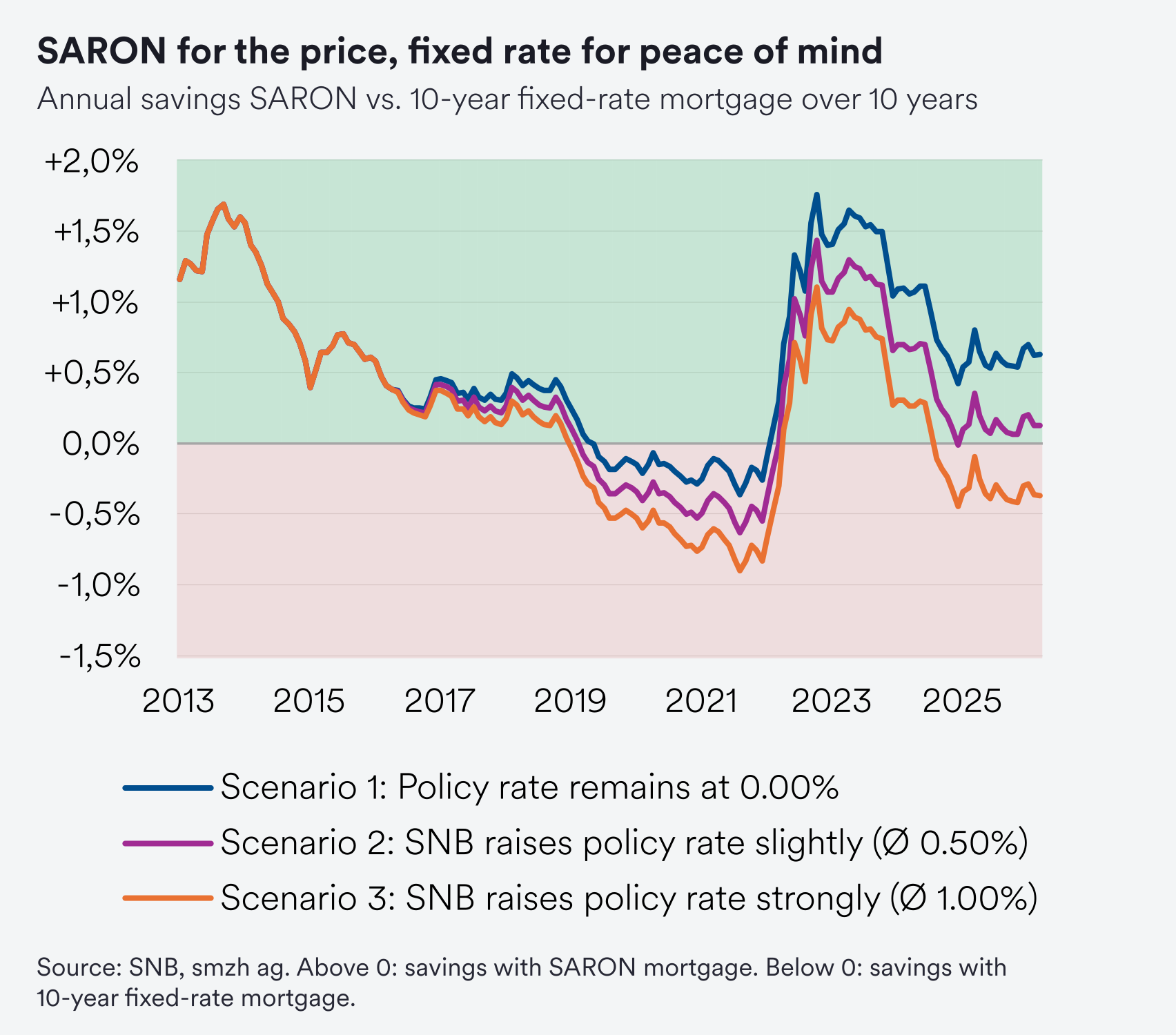
A rational assessment is crucial: If the key interest rate remains at its current level over the next ten years, a SARON mortgage would be about 0.50 percentage points cheaper per year compared to a ten-year fixed-rate mortgage under current market conditions. The key interest rate would need to average roughly 0.50% over the entire term for both options to be cost-neutral, and significantly higher for a fixed-rate mortgage to become financially advantageous. While it is not impossible for the key rate to reach such a level in the next ten years, it does currently appear unlikely.