smzh blue logo
Real Estate

2026 promises to be a favorable year for investment properties

Artikel
15 Jan 2026
smzh-image

Swiss real estate market remains a haven of stability

While many regions of the world are witnessing armed conflicts, geopolitical tensions, and periods of pro-nounced market volatility, the Swiss real estate market remains a haven of stability. It has been remarkably resil-ient to global turbulence and remains an attractive haven for investors, supported by a return to a low interest-rate environment and persistent housing shortages, with the vacancy rate recently at only around 1%.

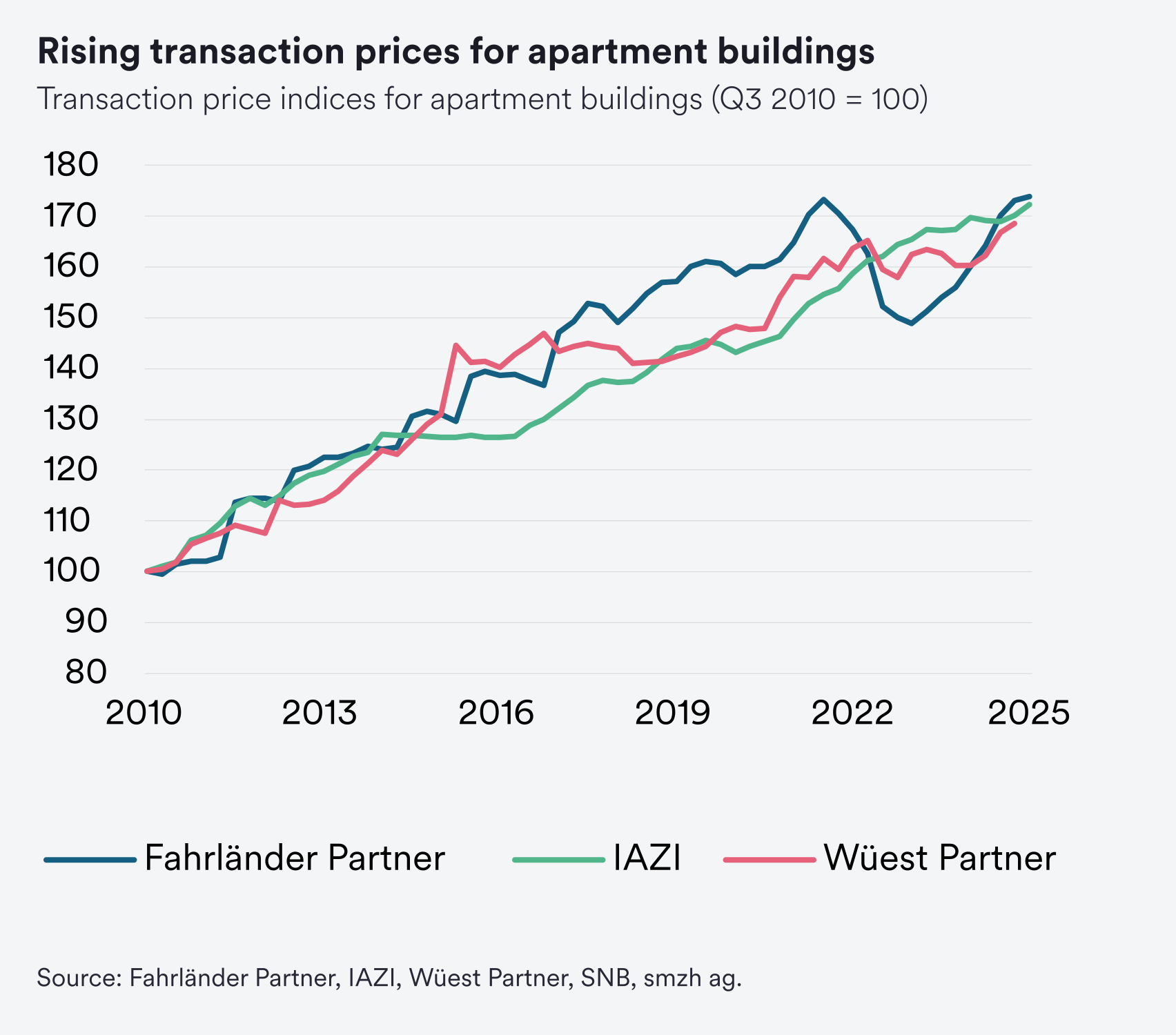
Given the strong inflow of capital and insufficient new construction activity, it appears to be only a matter of time before apartment buildings experience a noticeable increase in prices.

Euphoria in capital markets intensifies further

Institutional investors such as pension funds, insurance companies, and asset managers are intensifying their search for reliable returns in the current low interest-rate environment and are increasingly shifting their focus to the Swiss real estate market. The risk-return profile is particularly favorable at the moment: vacancies in the rental housing market are very low, rent levels are high, and construction activity, despite some impulses, remains structurally insufficient. Against this backdrop, investor demand again increased significantly in 2025, with substantial additional capital raised for real estate vehicles. This means that 2025 not only exceeds the previous year, 2024, but also clearly surpasses the years 2021 and 2020.

Real estate indices on the rise, premiums increase sig-nificantly

Strong investor interest is reflected not only in substantial capital increases but also in the price performance of listed real estate funds and shares. The two key Swiss real estate indices – the SWIIT (listed real estate funds) and the SREAL (listed real estate shares) – each ended 2025 with a gain of more than 10%. At the same time, the premium, i.e. the difference between market capitalization and net asset value, has widened significantly and now averages just under 40% for real estate funds and more than 25% for real estate shares.

Property values rise, acquisition yields decline

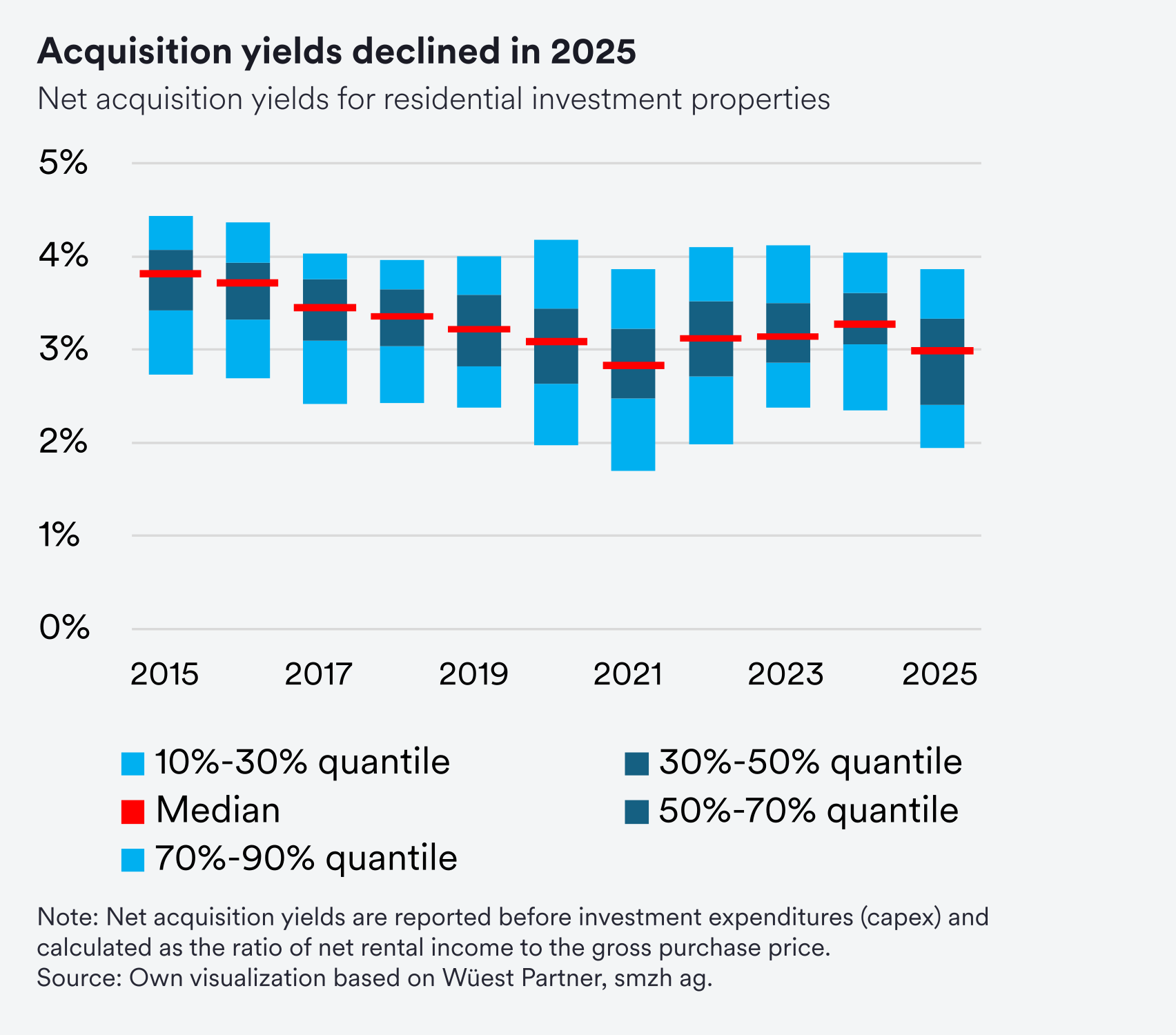
into play: the acquisition yield. Put simply, this is the in-verse of the price-earnings ratio used in the stock market and shows how much investors are willing to pay for one franc of rental income. If the acquisition yield decreases, the market pays higher prices for the same income – even if there is little change in operational performance. This is precisely what is happening at the moment: lower interest rates and pronounced excess demand already led to declining acquisition yields in 2025. As demand is expected to remain high in 2026, acquisition yields are likely to decrease further, supporting additional price increases.

If banks further ease their lending policies, this would expand the pool of potential buyers and further improve conditions for investors.

Image 4
Image 3

Easing of bank financing expected in 2026

The past years have been characterized by restrictive lending practices for investment properties and devel-opment projects. Rising interest rates, the disappearance of Credit Suisse, and the implementation of Basel III led to a very cautious risk policy. In the meantime, the mortgage market has stabilized, and several factors point to broad-er credit availability in 2026.

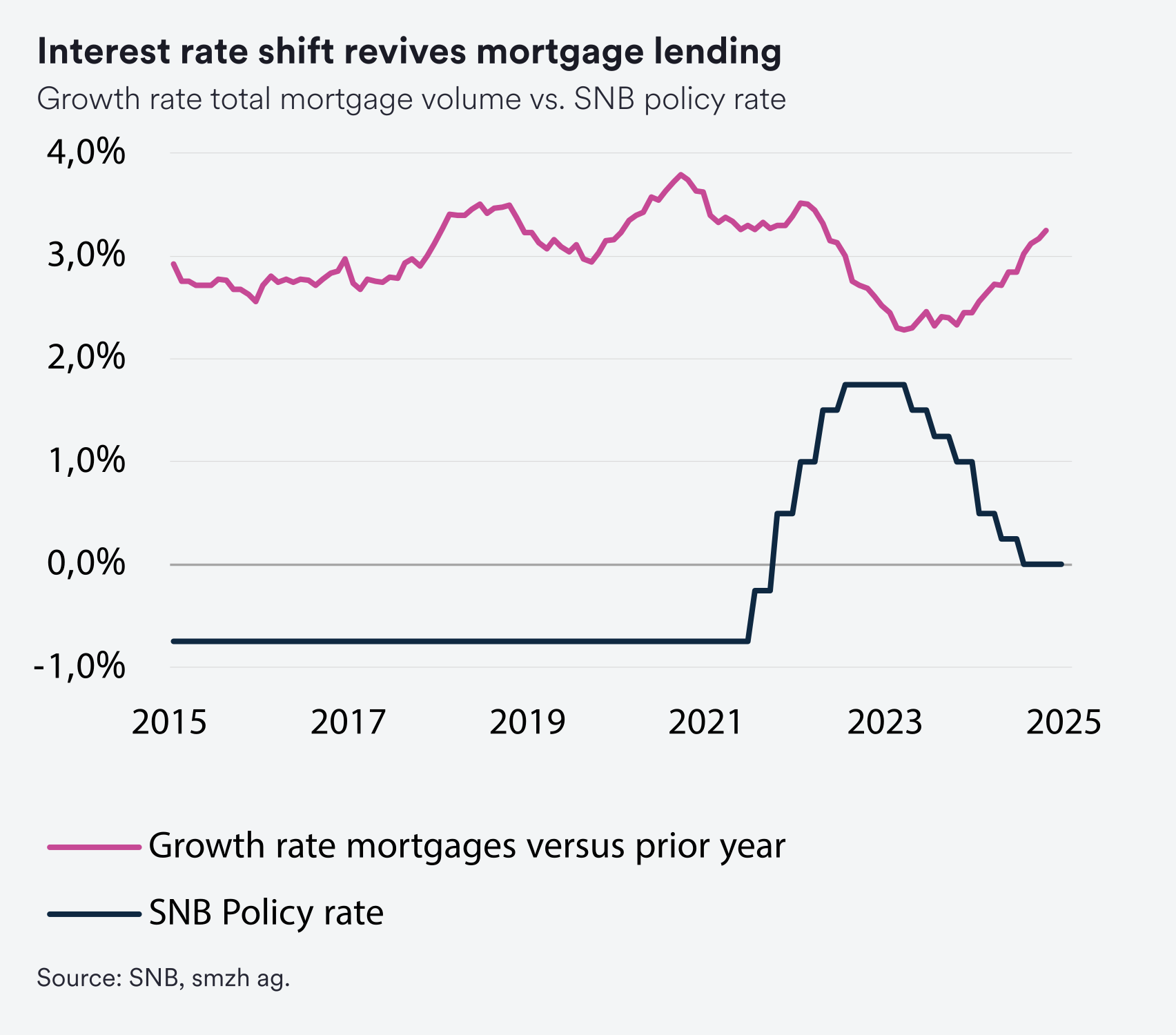
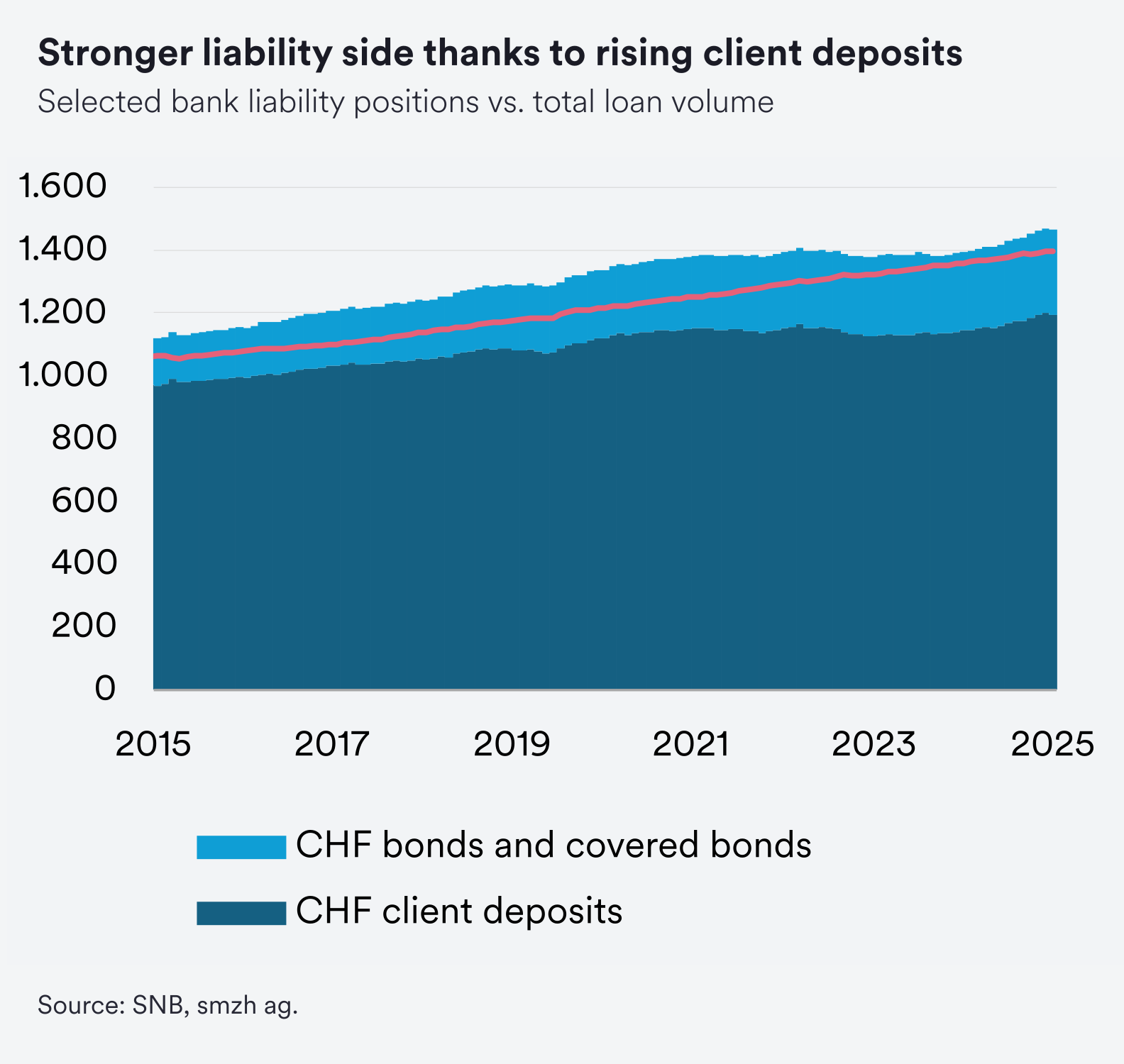
The mortgage volume developed almost in direct opposi-tion to the key interest rate: as interest rates rose, lending collapsed, while falling interest rates have recently led to clear growth once again. Drivers of this recovery include, among other factors, the return of favorable client depos-its and declining deposit margins.

In order to secure their profitability, banks are very likely to expand their lending volumes in 2026, but will also have to assume more risk – especially in the form of more loans for investment properties and development projects. As a result, credit supply is expected to increase significantly, even though pricing may remain challenging for the time being.

Outlook 2026: A strong investment year for apartment buildings

The key fundamental factors indicate that apartment buildings are set for another exceptionally strong invest-ment year in 2026: high demand, stable returns, declining financing costs, and ongoing yield compression are cre-ating an environment in which further price increases are very likely.

Image 1
Image 2

Download the latest "Outlook Real Estate Market" now

EN download
Author:
smzh-image

Burak Er

Head Research & Advisory Solutions
Share on: