Understanding and managing risks professionally
The higher yields of emerging market bonds reflect traditional risks: credit, liquidity, and currency risks are typically more pronounced than in developed markets. While emerging market bonds on average exhibit similar default rates as developed markets, their dispersion and fluctuations in periods of stress are greater. Accordingly, broad diversification is essential to effectively reduce single-issuer risk. Nevertheless, these risks also present opportunities for CHF-based investors: a structural yield premium over domestic bonds, as well as significantly broader portfolio diversification.
How should Swiss investors consider emerging market bonds?
Broad-based mutual funds or ETF solutions, most of which are denominated in USD or EUR, are suitable for CHF portfolios. In some markets, emerging market bonds in local currencies can be acquired directly, provided the currencies are freely convertible. However, the majority of investment solutions are again denominated in USD or EUR, either on a currency-hedged or unhedged basis. For Swiss investors, it is advisable to limit additional foreign currency exposures, regardless of whether the emerging market bonds are issued in hard or local currencies. Although the current cost of hedging USD investments is approximately 4.1% p.a., currency hedging often remains sensible.
Depending on their risk tolerance, investors can allocate to the following segments:
- Conservative: Sovereign bonds in hard currency
- Balanced: Combination of sovereign and corporate bonds in hard currency
- Yield: Local currency bonds
Where do emerging market bonds stand today?
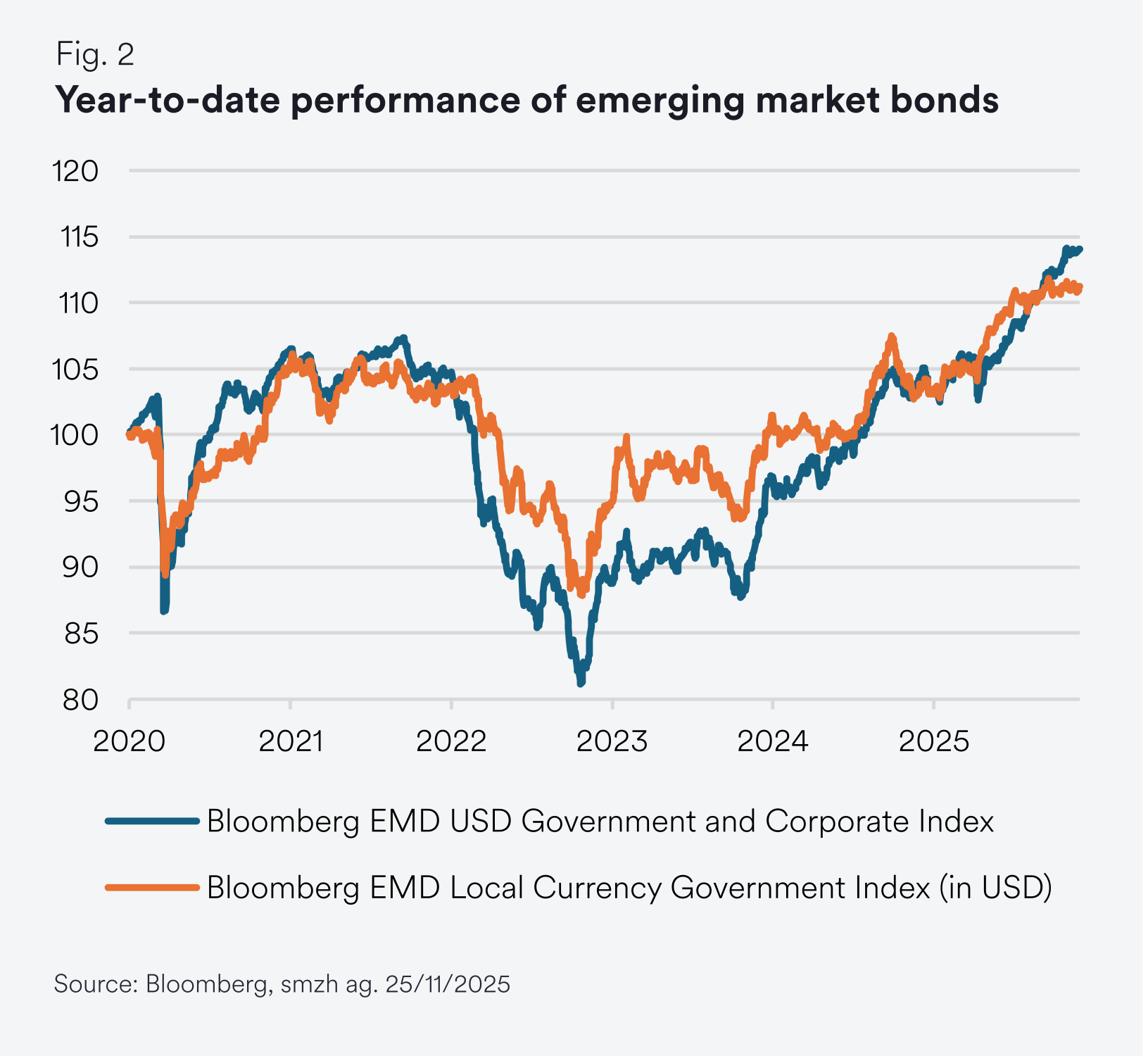
Emerging market bonds have delivered a very robust performance in 2025, significantly outperforming developed market peers. The macroeconomic environment in many emerging economies remains solid. A weak US dollar and further interest rate cuts by the US Federal Reserve are reducing refinancing costs for emerging markets, further fueling demand for emerging market bonds. Even though credit spreads have already tightened considerably and returns similar to those in 2025 may be difficult to repeat, the overall return potential versus developed market bonds remains attractive.